Destinations Article
Morocco’s Most Incredible Landscapes: Desert, Mountains, Gorges & Coast
MAby marrakeshexpresstour 5 min read

From Sahara dunes to Todra Gorge and Chefchaouen's blue streets — the landscapes that make Morocco one of the most visually striking road trips anywhere.
Few countries pack this much visual range into one road trip. Inside a single week you can go from snow on a mountain pass to sand dunes stretching to the horizon to a walled Atlantic port town — and most of it is reachable on the same road out of Marrakech. Here’s what’s actually worth stopping for.
The High Atlas Mountains: Morocco’s natural backbone
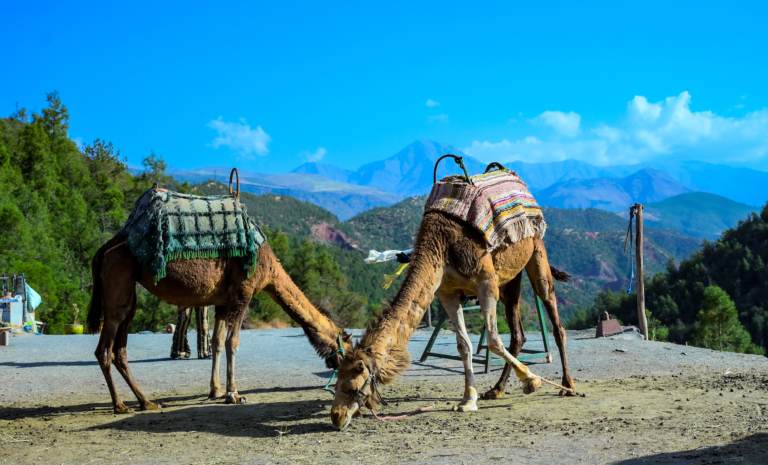
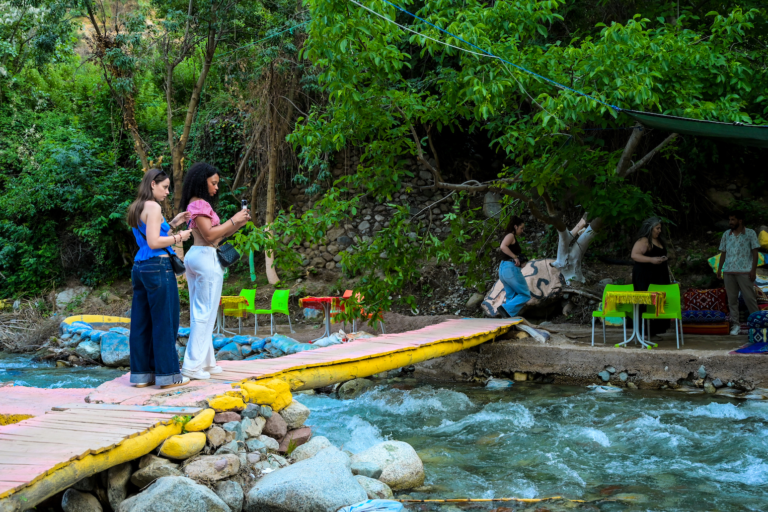
The High Atlas rises directly behind Marrakech — Jbel Toubkal, North Africa’s highest peak, is visible from the city on a clear day. Closer in, the Ourika Valley is under an hour’s drive and drops you into terraced fields, walnut groves and Amazigh villages built into the hillside, with a waterfall hike at the end. Further into the range, roads climb through switchbacks with views back down valleys that look nothing like the flat plain around Marrakech. Spring brings wildflowers into the lower valleys; by December, the higher passes carry real snow. Our Ourika Valley guide covers the most accessible route in detail, and a sunrise balloon ride over the foothills is the one way to see the whole range’s scale at once, rather than one valley at a time.
The Sahara Desert: endless horizons
Erg Chebbi, the dune field near Merzouga, is what most people picture when they think “Sahara” — dunes reaching 150 meters in places, shifting color from gold to deep orange as the sun drops. Getting there from Marrakech is a full day’s drive (around 9-10 hours), which is why it’s done as a 2-3 day loop rather than a quick visit: a camel trek in at sunset, a night in a desert camp under a sky with none of the light pollution you’d see anywhere near a city, then sunrise back over the dunes before the drive out. Our full guide to visiting the Sahara breaks down every route option and which fits your timeline.
The Dades Valley: a landscape of contrast
Known locally as the Valley of a Thousand Kasbahs, the Dades is where the landscape shifts hardest in the shortest distance — red rock cliffs, a river-fed strip of green farmland running through the valley floor, and switchback roads climbing toward rock formations locals call “Monkey Fingers” for their odd, eroded shapes. It sits directly on the classic Marrakech-to-Sahara route, so nearly every multi-day desert tour passes through it. The mistake is treating it as scenery to drive past rather than a proper stop — the switchback viewpoint alone is worth 20 minutes out of the car.
Todra Gorge: nature’s cathedral
A short drive from the Dades, the Todra River has cut a canyon with limestone walls rising up to 300 meters on either side, narrowing to just a few meters wide at the base at its most dramatic point. It’s become a genuine rock-climbing destination in its own right, but you don’t need to climb anything to feel the scale of it — walking the gorge floor at midday, when the light drops straight down between the walls, is reason enough to stop.
The palm groves of Morocco
Scattered through the south, these oases are working farmland as much as scenery — date palms shading smaller crops beneath them, fed by centuries-old irrigation channels (khettaras) that still function today. The largest groves near Skoura and along the route to Merzouga are worth a slow walk rather than a drive-through; the temperature drop under the palm canopy alone is noticeable after hours in open desert sun.
The Atlantic Coast
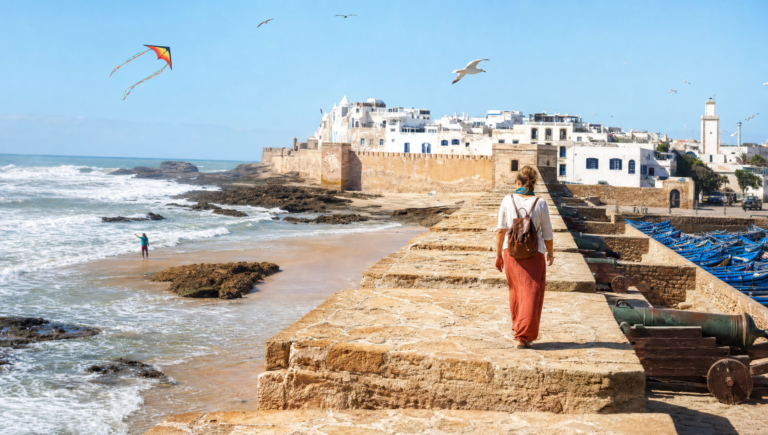
Essaouira is the easiest coastal landscape to reach from Marrakech — about 2.5 hours by road — and looks almost nothing like it: a windswept, walled medina, fishing boats stacked in a working port, and ramparts you can walk for ocean views in both directions. The wind that makes it one of the world’s better windsurfing spots also keeps it noticeably cooler than Marrakech, which makes it a genuine relief in summer. Our beaches near Marrakech guide covers this and the other coastal options within reach.
The blue hills of Chefchaouen
Set in the Rif Mountains in the north, Chefchaouen’s blue-washed medina sits against a genuinely different landscape than anywhere else on this list — green, wetter hills rather than the arid south. It’s a full day’s drive from Marrakech, closer to Fes or Tangier, so it fits a longer multi-city route rather than a Marrakech-only trip. The Spanish Mosque viewpoint above town, reached by a short uphill walk, is the spot to see both the blue streets and the hills around them at once. Our best places to visit in Morocco guide covers how it fits into a longer route.
Putting it together: a landscape road trip
The route most tours already run — Marrakech, over the Atlas, through the Dades Valley and Todra Gorge, on to Merzouga and the Sahara — covers five of these landscapes in a single 3-4 day loop without much extra driving. Add Essaouira as a coastal day trip before or after, and you’ve seen mountains, gorges, palm oases, desert and coast in under a week. Chefchaouen is the outlier — it needs a longer, more northern-focused itinerary to include properly. If you’d rather not plan the logistics yourself, our custom tour builder can string these together based on how many days you actually have.
Best time to experience Morocco’s landscapes
Spring and autumn give the mildest temperatures across both mountains and desert, and are the best all-around windows for a full road trip. Summer suits the coast and higher mountain elevations, where the heat is far more bearable than in the desert or the plains. Winter brings real snow to the Atlas passes and some of the clearest Sahara night skies of the year, though desert nights get genuinely cold. See our full seasonal guide for exact month-by-month detail.