

A Guide to Marrakech’s Craft Traditions and Artisan Heritage

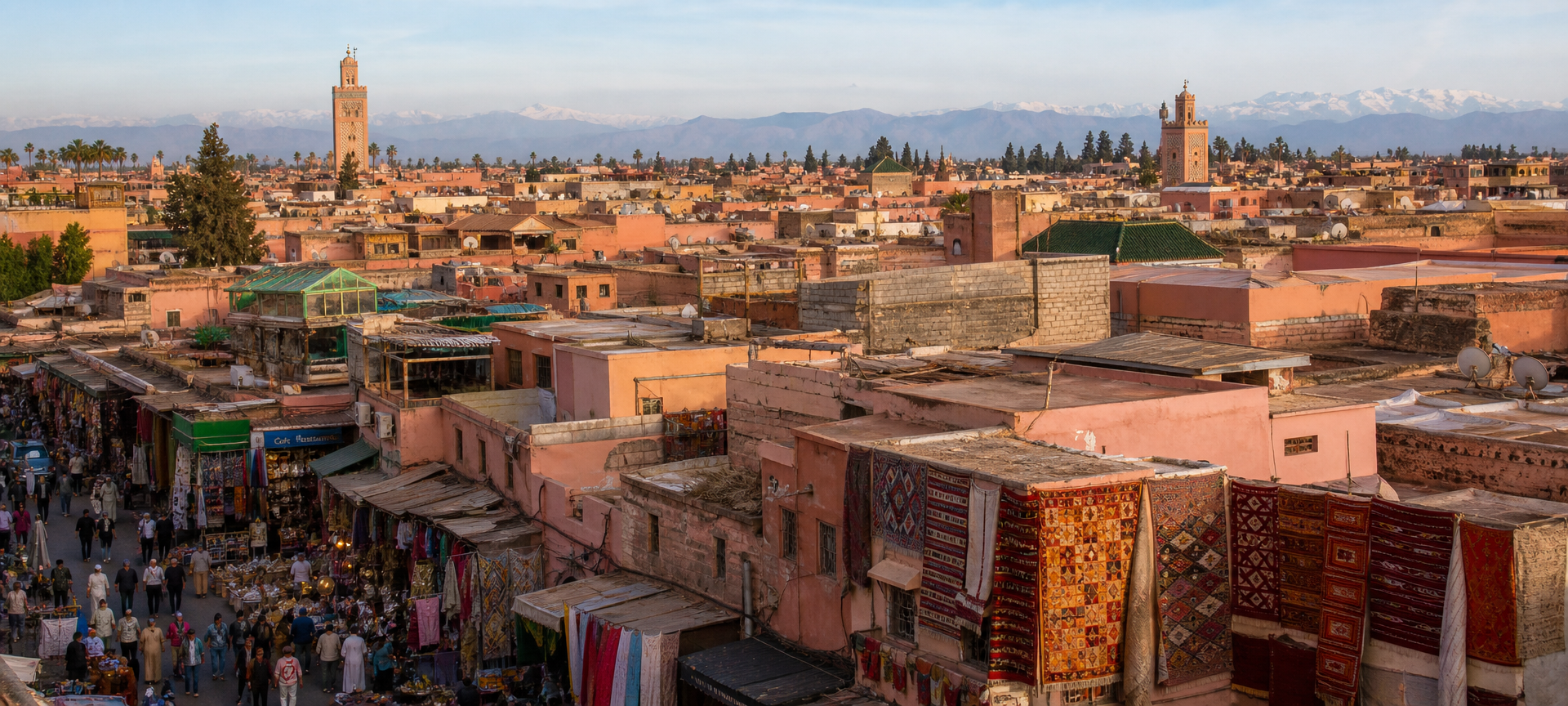
Marrakech is a city where craftsmanship is woven into everyday life. For centuries, skilled artisans have passed their knowledge from one generation to the next, creating handmade goods that reflect Morocco’s rich Amazigh (Berber), Arab, and Andalusian heritage. As you wander through the Medina and its colorful souks, you’ll discover workshops filled with the sounds of hammering metal, carving wood, weaving rugs, and shaping leather by hand.
Whether you’re shopping for authentic souvenirs or simply fascinated by traditional craftsmanship, this guide explores seven of Marrakech’s most iconic artisan traditions.
Why Marrakech Is Morocco’s Artisan Capital
The historic Medina of Marrakech is home to hundreds of small workshops where traditional techniques are still practiced today. Unlike factory-made products, many items are handcrafted using methods that have remained unchanged for centuries.
Buying directly from local artisans not only gives you a unique keepsake but also helps preserve Morocco’s cultural heritage.
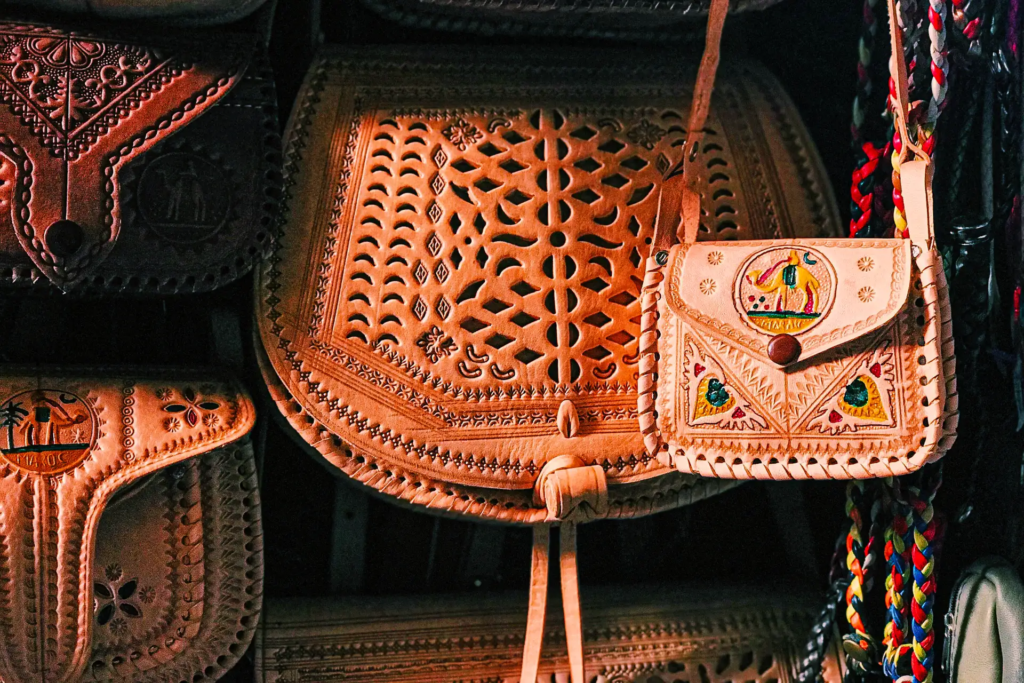
1. Leather – Handmade Moroccan Craftsmanship
Leatherworking is one of Marrakech’s oldest and most respected crafts. Skilled artisans transform high-quality leather into beautiful handbags, belts, wallets, jackets, poufs, slippers (babouches), and travel accessories.
Many workshops still use traditional tanning and hand-stitching techniques, ensuring every item is unique.
What to Look For
- Leather bags
- Babouches (traditional slippers)
- Belts
- Wallets
- Handmade poufs
- Travel accessories
Shopping Tip: Genuine leather develops a rich patina over time and often has slight variations that highlight its handmade quality.
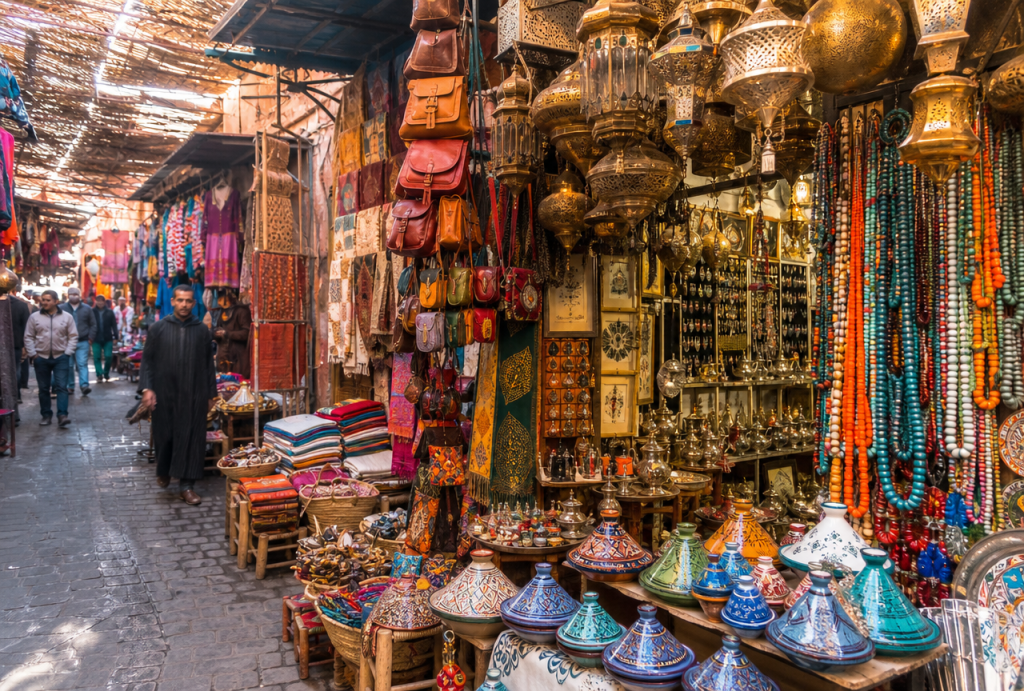
2. Brass and Copper Lanterns
One of Marrakech’s most recognizable crafts is its intricate brass and copper lanterns. Skilled metalworkers carefully cut, hammer, and engrave each lantern by hand, creating beautiful geometric patterns inspired by Islamic architecture.
When illuminated, these lanterns cast stunning decorative shadows, making them one of Morocco’s most popular home décor items.
Popular Items
- Hanging lanterns
- Table lamps
- Candle holders
- Decorative trays
- Teapots
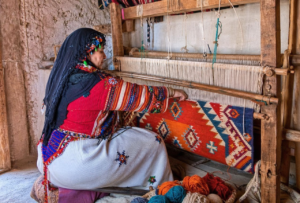
3. Berber Rugs
Handwoven Berber rugs are among Morocco’s most treasured artisan products. Each rug tells a story through its symbols, colors, and geometric patterns, often representing family history, protection, fertility, or nature.
Made primarily from natural wool, every rug is unique and can take weeks or even months to complete.
Why They’re Special
- Handmade using traditional looms
- Natural wool
- Symbolic Amazigh designs
- Durable and long-lasting

4. Zellige Tiles – Morocco’s Iconic Mosaic Art
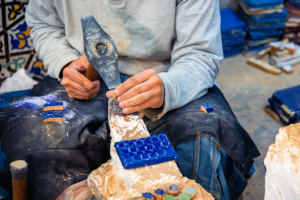
Zellige is one of Morocco’s most celebrated artistic traditions. Artisans hand-cut small pieces of glazed ceramic before assembling them into intricate geometric patterns that decorate palaces, riads, fountains, mosques, and courtyards.
Creating authentic zellige requires years of training and extraordinary precision.
You’ll see this craftsmanship throughout Marrakech, especially in historic buildings such as Bahia Palace and Ben Youssef Madrasa.
5. Cedar Wood Carving
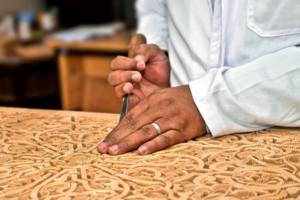
The fragrant cedar wood of Morocco’s Middle Atlas Mountains has been used for centuries to create furniture, doors, ceilings, mirrors, decorative boxes, and architectural details.
Master woodcarvers carefully shape each piece using traditional hand tools, producing intricate floral and geometric designs that showcase remarkable skill.
Common Creations
- Carved doors
- Furniture
- Decorative boxes
- Mirrors
- Wall panels
6. Jewelry – Amazigh Silver and Traditional Designs
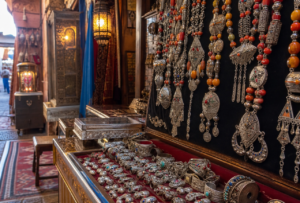
Moroccan jewelry combines beauty with cultural meaning. Traditional Amazigh (Berber) jewelry often features handcrafted silver, colorful enamel, coral, amber, and semi-precious stones.
Every region of Morocco has its own distinctive jewelry style, making each piece unique.
Popular items include:
- Necklaces
- Bracelets
- Earrings
- Rings
- Brooches
7. Traditional Moroccan Breads
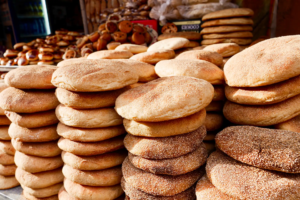
Bread is an essential part of Moroccan daily life and one of the country’s oldest culinary traditions. Throughout Marrakech, local bakeries prepare fresh bread every morning using recipes that have remained unchanged for generations.
Many families still take homemade dough to neighborhood communal ovens, where it is baked in traditional wood-fired ovens.
Popular breads include:
- Khobz
- Batbout
- Msemen
- Harcha
Visiting a traditional bakery offers a fascinating glimpse into everyday Moroccan culture.
Where to Buy Authentic Handmade Crafts
For the best shopping experience, explore:
- The Medina Souks
- Souk Semmarine
- Rahba Kedima
- Artisan cooperatives
- Local workshops
- Boutique riads featuring artisan collections
Buying directly from makers supports local families and preserves centuries-old traditions.
Tips for Shopping in Marrakech
- Compare prices before buying.
- Bargaining is expected in many souks.
- Ask artisans about how products are made.
- Inspect craftsmanship carefully.
- Consider shipping larger items like rugs.
- Support workshops that produce handmade rather than factory-made goods.
Frequently Asked Questions
What is Marrakech famous for?
Marrakech is famous for leather goods, Berber rugs, brass lanterns, ceramics, zellige tiles, cedar wood carving, spices, jewelry, and traditional artisan markets.
Where can I buy authentic handmade crafts?
The Medina and its historic souks offer the widest selection of authentic handmade products, with many artisans working directly in their workshops.
Are handmade products expensive?
Prices vary depending on craftsmanship and materials. Handmade items often cost more than factory-made alternatives but offer significantly higher quality and authenticity.
Is bargaining acceptable?
Yes. Negotiating prices is a traditional part of shopping in Marrakech’s souks and is generally expected.
Final Thoughts
Marrakech’s artisan heritage is one of the city’s greatest treasures. Every handcrafted lantern, leather bag, Berber rug, zellige mosaic, cedar carving, and piece of jewelry reflects generations of creativity, dedication, and cultural pride.
Exploring the city’s workshops and souks is more than a shopping experience—it’s an opportunity to connect with Morocco’s living traditions and bring home a meaningful piece of its remarkable heritage.