

Hidden Doors of Marrakech: The Stories Behind the Medina’s Most Beautiful Entrances

Introduction
Walk through the streets of Marrakech long enough, and you’ll notice something extraordinary. Beyond the bustling souks, vibrant markets, and lively squares, the city reveals another kind of beauty—its doors.
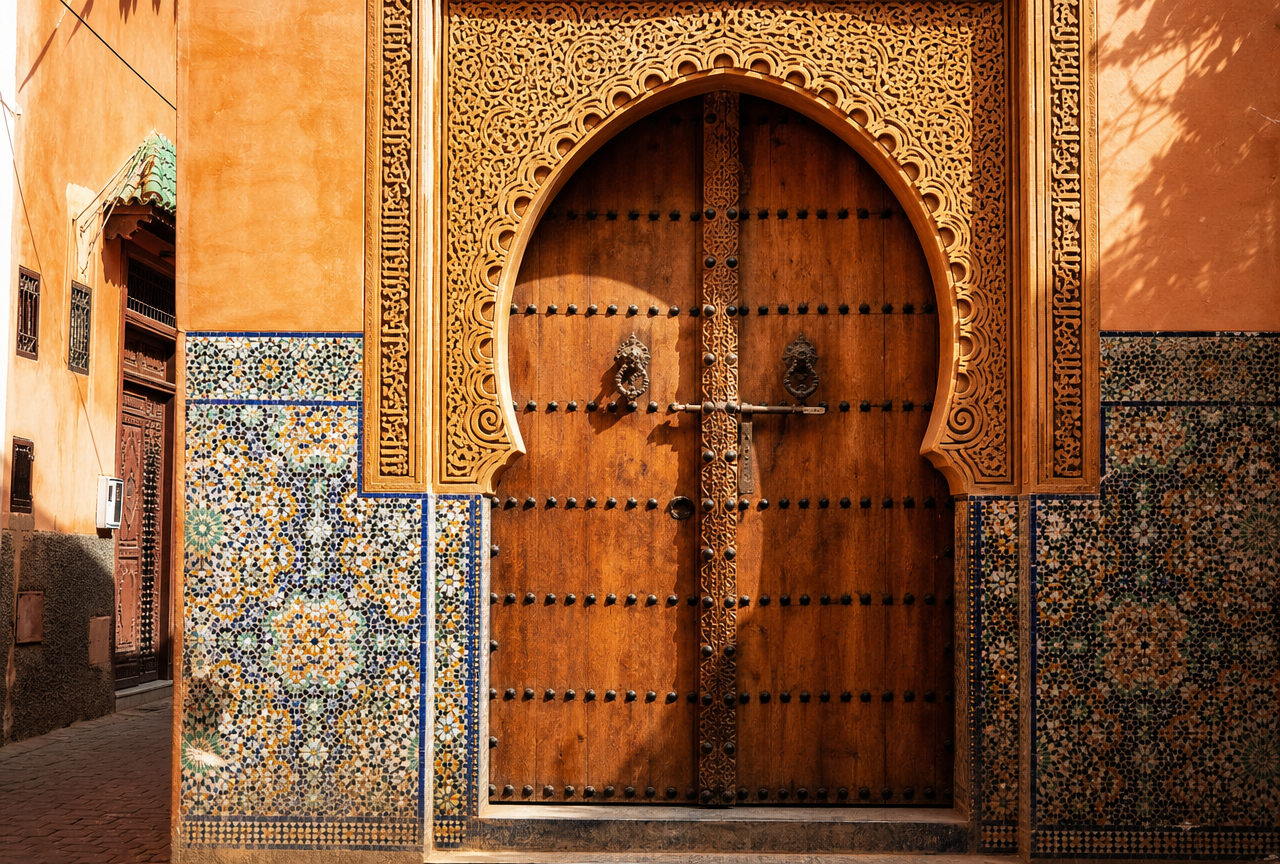
From massive cedar wood entrances decorated with intricate carvings to colorful doorways framed by handmade zellige tiles, every door in the Medina seems to have its own personality. Some lead to luxurious riads hidden behind modest walls, while others open into peaceful courtyards, family homes, artisan workshops, or centuries-old palaces.
To many visitors, they’re simply beautiful architectural details. But to Marrakech, every door tells a story about craftsmanship, tradition, privacy, and the city’s rich history.
More Than Just an Entrance
In Moroccan architecture, a door is much more than a way to enter a building. It reflects the importance of hospitality while preserving the privacy of family life. Behind the often simple exterior walls of the Medina lie tranquil courtyards filled with fountains, gardens, and elegant interiors that remain hidden from the busy streets outside.
This contrast between modest exteriors and breathtaking interiors is one of Marrakech’s most fascinating characteristics. The doors become symbolic thresholds between the energetic rhythm of the Medina and the peaceful world within.
The Craftsmanship Behind Every Door
Many of Marrakech’s traditional doors are handcrafted from cedar wood sourced from the Atlas Mountains. Skilled artisans spend weeks carving geometric patterns, floral motifs, and decorative details using techniques passed down through generations.
Brass knockers, hand-forged iron fittings, and colorful ceramic tile frames complete the design, turning each entrance into a work of art. No two doors are exactly alike, and each reflects the creativity and skill of the craftsmen who built it.
Walking through the Medina becomes a treasure hunt as every corner reveals another unique design waiting to be admired.
The Language of Colors
Color plays an important role in Marrakech’s architecture. Rich shades of blue, green, red, and natural wood tones decorate many entrances, creating striking contrasts against the city’s famous terracotta walls.
Green often symbolizes prosperity and spirituality, while deep blue provides a sense of calm. Warm wooden finishes celebrate natural materials and traditional craftsmanship. Together, these colors create a visual identity that has become one of Marrakech’s most recognizable features.
For photographers, these vibrant entrances offer endless opportunities to capture the city’s artistic character.
Discovering Hidden Riads
One of the greatest surprises for first-time visitors is realizing that some of Marrakech’s most luxurious accommodations hide behind remarkably simple doors.
A modest wooden entrance in a quiet alley may open into an elegant riad filled with orange trees, mosaic fountains, carved plasterwork, and peaceful courtyards. This sense of discovery is part of what makes staying in a traditional riad so memorable.
Rather than revealing everything at first glance, Marrakech invites visitors to explore slowly and uncover its hidden treasures one doorway at a time.
Doors That Lead to Creativity
Many of the Medina’s doors belong to artisan workshops where Morocco’s creative traditions continue to flourish. Behind these entrances, visitors can watch craftsmen shape brass lanterns, weave colorful rugs, carve cedar wood, and create intricate zellige mosaics by hand.
Stepping inside these workshops offers more than the chance to shop. It provides an opportunity to witness centuries-old skills that remain an essential part of Marrakech’s cultural identity.
A Photographer’s Dream
The Medina’s doors are among Marrakech’s most photographed architectural features, yet every image captures something different. Morning light highlights the textures of carved wood, while the golden glow of late afternoon enhances the warm colors of the city’s walls.
Rather than searching for one famous doorway, take time to wander through quieter neighborhoods where unexpected entrances appear around nearly every corner. The most memorable photographs are often the ones you discover by accident.
Respecting Local Homes
While Marrakech’s beautiful doors invite admiration, it’s important to remember that many of them belong to private homes. Visitors should always respect residents by avoiding blocked entrances and asking permission before photographing people who may be nearby.
Responsible tourism helps preserve the welcoming atmosphere that makes exploring the Medina such a rewarding experience.
Why These Doors Define Marrakech
Every carved panel, brass knocker, and colorful tile tells a story about Marrakech’s history, craftsmanship, and architectural heritage. Together, they reflect the city’s balance between openness and privacy, tradition and creativity, simplicity and elegance.
The doors remind us that Marrakech’s greatest treasures are often hidden in plain sight. By slowing down and appreciating these details, visitors discover a deeper connection with the city’s culture and character.
Final Thoughts
Marrakech is often celebrated for its bustling souks, magnificent palaces, and lively squares, but some of its most unforgettable moments are found in the quiet details. The doors of the Medina invite curiosity, reward careful observation, and reveal the extraordinary craftsmanship that defines the city.
On your next walk through Marrakech, pause before rushing to the next attraction. Look closely at the carved wood, the colorful tiles, and the handmade brasswork. Behind every beautiful door lies another story, and together, they form one of the most enchanting chapters of Marrakech itself.
Frequently asked questions
What makes the doors of Marrakech so special?
The doors of Marrakech are celebrated for their intricate craftsmanship, traditional cedar wood carvings, colorful zellige tiles, and centuries of architectural heritage that reflect the city's rich history.
Why are many beautiful doors hidden inside the Marrakech Medina?
The Medina was designed to protect privacy, so many homes and riads have simple exterior walls with stunning handcrafted doors leading to beautiful inner courtyards.
Can visitors photograph the famous doors of Marrakech?
Yes. Most doors visible from public streets can be photographed, but visitors should always respect private property and avoid disturbing residents.
What materials are traditional Marrakech doors made from?
Traditional doors are commonly crafted from Atlas cedar wood and decorated with hand-forged iron, brass knockers, carved details, and colorful Moroccan mosaic tiles.
Where can I find the most beautiful doors in Marrakech?
Many of the most beautiful doors can be found throughout the Medina, especially near traditional riads, historic palaces, artisan workshops, and quiet residential alleys.
Why are Moroccan doors often decorated with brass knockers?
Brass knockers are both decorative and functional, representing traditional Moroccan craftsmanship while adding elegance and character to each entrance.
Are the famous Marrakech doors part of Moroccan cultural heritage?
Yes. These historic doors showcase Morocco's architectural traditions, skilled craftsmanship, and cultural identity, making them an important part of the country's heritage.
What is the best time to explore the doors of Marrakech?
Early morning and late afternoon provide pleasant temperatures, softer lighting, and fewer crowds, making them ideal times for walking and photography.
Can I stay in a traditional riad behind one of these historic doors?
Yes. Many beautifully restored riads are located behind traditional Medina doors, offering authentic Moroccan hospitality, peaceful courtyards, and luxurious accommodations.
Why should travelers look beyond Marrakech's famous landmarks?
Exploring the Medina's hidden streets and architectural details, including its iconic doors, allows visitors to experience the city's authentic charm, history, and craftsmanship beyond the main tourist attractions.