
Morocco, Honestly: What I’d Tell a Friend Before They Go
Every Morocco article promises you “the real Morocco” and then hands you the same ten photos of blue doors and camel silhouettes. Here’s what I’d actually tell a friend, the version with the parts most guides leave out.
It contradicts itself constantly, and that’s the point
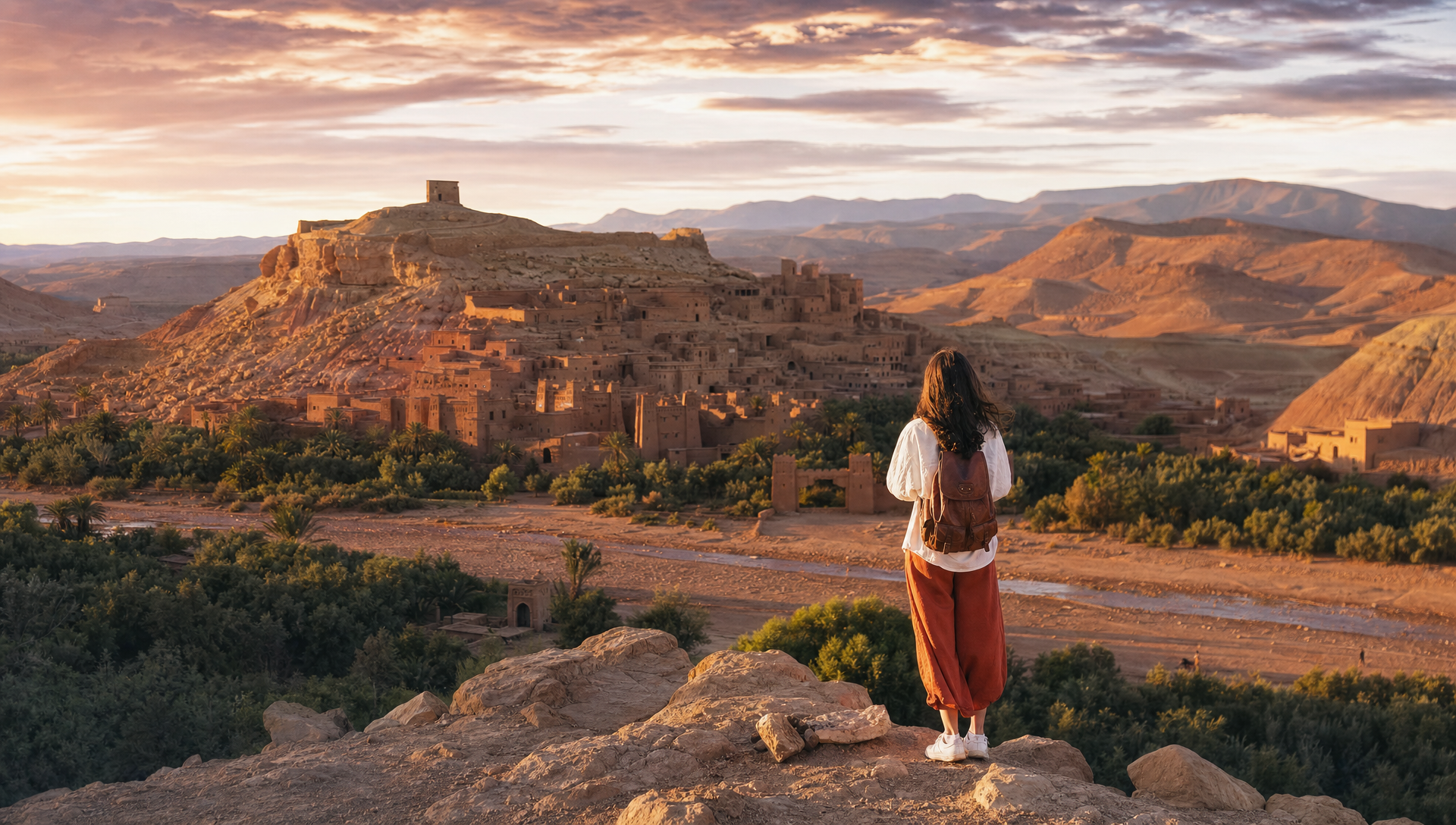
Marrakech is called the Red City for its ochre walls; a completely different city, Chefchaouen, is the actual Blue City, hundreds of kilometers north. You can eat breakfast in a medina alley too narrow for a car and be on a highway toward glass office towers in Casablanca by afternoon. You can watch the sun set from a rooftop café and, two days later, watch it set over dunes with no building in sight. Morocco doesn’t resolve these contrasts for you. It just keeps handing them to you, back to back, and that’s honestly the best argument for going — not any single postcard moment.
The hospitality is real, and it will make you uncomfortable in a good way
Mint tea shows up whether or not you’re buying anything. Shopkeepers will sit you down and talk about their kids before they talk about their carpets. It’s not a sales tactic wearing a friendly mask — it’s genuinely how people are raised to treat a guest, and if you come from a culture where hospitality is more transactional, it can feel disarming. Let it. Don’t rush out of a conversation because you feel you “should” be somewhere else on your itinerary.
Haggling is a conversation, not a con
First-time visitors brace for haggling like it’s an ambush. It isn’t. In the souks, the asking price is a starting point everyone understands is a starting point — sellers expect the back-and-forth and often enjoy it more than a quick yes. You’re not being tricked by negotiating; you’d be missing part of the actual interaction by not doing it. A rough rule: if the first price makes you flinch, counter at roughly half and meet somewhere in the middle you’re happy with. If a number ever makes you truly uncomfortable, walking away is always fine — there’s always another stall.
Plan less than you think you need to
The itineraries that go badly are the ones scheduled to the hour. Medinas are built to disorient you a little on purpose — that’s not a flaw, it’s centuries of urban design meant to slow down commerce and conversation. Leave gaps. The best hour of a first Marrakech trip is rarely the one on the schedule; it’s the alley you took by accident.
The food is not just tagine
Tagine earns its reputation, but a week of only tagine is a week of missing most of Moroccan food: msemen (a folded, layered flatbread) for breakfast, harira soup that varies by household, grilled fish on the coast, and pastilla — a savory-sweet pigeon or chicken pie dusted in cinnamon and sugar that sounds wrong on paper and isn’t. Ask what a place is known for locally rather than ordering the tourist-menu tagine every night.
Pack for three climates, not one
Coastal Essaouira, the Marrakech plains, and the Sahara are three different climates that can all be part of the same trip. Desert nights get cold even when the day was hot. A light layer you can add and remove does more work than any single “Morocco packing list” jacket recommendation.
The honest bottom line
Morocco rewards travelers who show up curious rather than travelers who show up with a checklist. If that sounds like you, we build trips — from a single desert tour to a full custom itinerary — around exactly that: enough structure to see the essentials, enough space to get pleasantly lost.
Frequently asked questions
Is Morocco safe for tourists?
Yes, for the vast majority of visitors Morocco is one of the more visited and tourism experienced countries in North Africa. Normal city travel awareness applies, as it would anywhere.
How many days do I need in Morocco?
A week gives you a real first trip a few days in Marrakech plus a desert or coastal extension. Ten to fourteen days lets you add the north (Fes, Chefchaouen) without rushing.
Is haggling really necessary in the souks?
It's expected in most souk shops rather than strictly necessary fixed-price shops exist too. Treat it as part of the interaction, not an obstacle to get through.
What's the best time of year to visit Morocco?
Spring (March-May) and autumn (September, November) have the most comfortable temperatures for both cities and the desert. Summer is very hot inland; winter nights in the desert and mountains get cold.
Do I need to speak Arabic or French?
No English is widely understood in tourist areas, especially with guides and in hotels and riads. A few French or Darija phrases go a long way with hospitality, but aren't required.