Morocco Travel Tips Article
Best Time to Visit Marrakech: A Month-by-Month Guide
MAby marrakeshexpresstour 3 min read
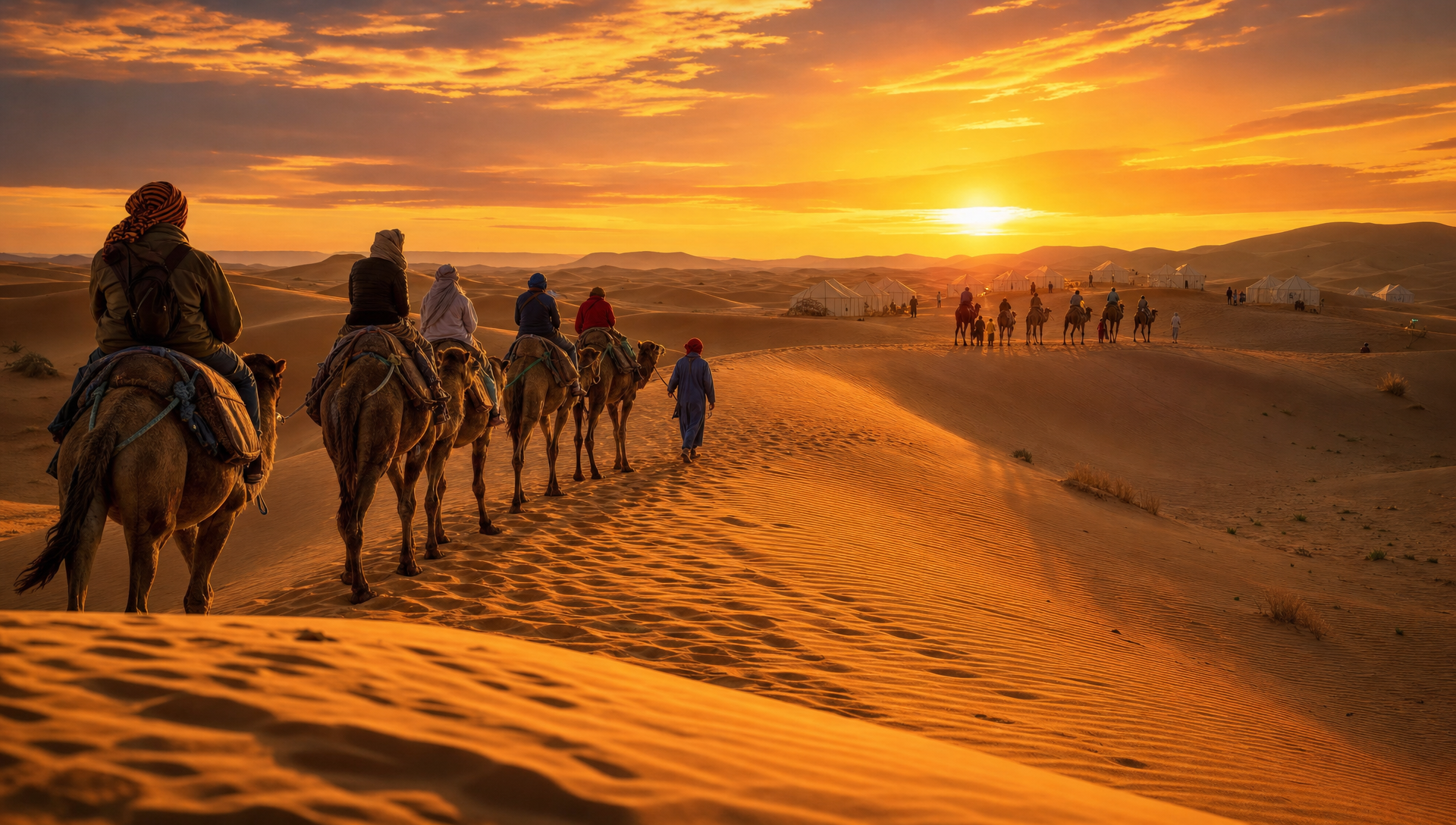
When is the best time to visit Marrakech and southern Morocco? A month-by-month breakdown of weather, desert conditions, and what it means for your tours.
Marrakech has a desert climate, which means the difference between visiting in April and visiting in August isn’t small — it changes what a Sahara tour feels like, whether Ourika Valley’s rivers are running full, and whether Essaouira’s coastal wind is a relief or a reason to pack a jacket. Here’s what to actually expect month by month, and how it should shape your trip.
Spring (March–May): the best all-round season
Spring is generally considered the best time to visit Marrakech and the south. Days are warm without being extreme, nights are comfortable, and the High Atlas snowmelt keeps rivers and waterfalls running at their fullest — which makes it the strongest season for an Ourika Valley day trip or a visit to Ouzoud Waterfalls. Desert tours are also comfortable in spring, before summer heat sets in on the road to Merzouga.
Summer (June–August): hot in the city, manageable in the mountains and desert camp
Marrakech itself gets very hot in summer, often above 38°C in July and August. This is exactly when a trip to Ourika Valley earns its reputation as a local escape — the higher elevation keeps it noticeably cooler than the city. Counterintuitively, summer desert tours are still popular: daytime heat in Merzouga is intense, but desert nights cool down fast, and camps are built around that rhythm. Coastal Essaouira is the most comfortable option of all in summer, since the Atlantic wind keeps temperatures well below Marrakech’s — see our Essaouira day trip guide.
Autumn (September–November): quiet, comfortable, and good hiking weather
Autumn brings temperatures back down without the crowds of spring. It’s a strong season for hiking at Setti Fatma in Ourika Valley or around Ouzoud, and a comfortable time for multi-day desert circuits since neither extreme heat nor cold dominates. If you’re planning a longer trip, our guide to multi-day Morocco tours covers how many days different routes need.
Winter (December–February): cold nights, snow on the Atlas, quieter desert camps
Winter days in Marrakech are mild and pleasant, but nights get cold, and the High Atlas peaks above Ourika Valley and along the Tizi n’Tichka pass are often snow-capped — dramatic for photos, but worth planning around if your route crosses the pass toward the desert. Desert camp nights near Merzouga can drop close to freezing, so winter Sahara tours need warmer layers than travelers expect from a “desert” trip. It’s also the quietest season, with fewer crowds at every stop.
How weather should shape which tour you book
If a waterfall hike is the priority, spring gives the fullest flow at Ourika and Ouzoud. If you’re escaping summer heat, Essaouira’s coast or Ourika’s elevation both work better than a full day in the city. If you’re doing the Sahara specifically, any season works, but pack for cold desert nights in winter and hot daytime driving in summer. For trip-specific pricing across seasons, see our Marrakech desert tour price guide.
Final thoughts
There’s no bad month to visit Marrakech, but spring and autumn are the easiest all-round choices if your schedule is flexible. Summer rewards travelers who plan around the heat — mountains, coast or desert nights rather than a full day in the city — and winter rewards those who don’t mind cool evenings in exchange for quiet, snow-capped scenery. Whichever season you land on, browse our full range of day trips and desert tours to plan around it.