Conseils de voyage au Maroc Article
Morocco Packing List: What a Local Guide Actually Packs (Every Season)
MApar marrakeshexpresstour 5 min de lecture

What to pack for Morocco, built from what our guides actually tell guests to bring — hammam essentials, real desert-scarf advice, and what to leave at home.
La plupart des listes d’affaires pour le Maroc se ressemblent, parce qu’elles sont écrites par des gens qui n’ont jamais vraiment mené un circuit dans le désert ni réservé un hammam ici. Celle-ci est différente — elle vient de ce que nos guides disent réellement aux voyageurs d’emporter, et elle écarte le remplissage générique (« prenez des lunettes de soleil », « prenez une gourde ») au profit des choses qui posent vraiment problème.
Why cotton beats synthetic here
La chaleur de Marrakech est sèche, pas humide, ce qui signifie que les tissus synthétiques respirants — parfaits pour les climats humides — ne vous rafraîchissent pas vraiment ici comme le font le coton et le lin. Emportez du coton et du lin par défaut, et gardez les vêtements de randonnée synthétiques pour le trekking dans l’Atlas, où l’on transpire en montée plutôt qu’en marchant à plat dans les ruelles de la médina.
What to actually bring for a hammam visit
This gets left off almost every packing list, and it shouldn’t. Most traditional hammams don’t supply towels or flip-flops, so bring your own: a lightweight towel, rubber flip-flops (the floors are wet and can be slippery), and a change of underwear. If you’re booking a private hammam through your riad or a tour rather than a public neighborhood hammam, ask in advance what’s provided — it varies a lot more than people expect.
Cash beats cards in the souks
Bring more small-denomination dirham notes than you think you’ll need. Most souk stalls, street food vendors and shared taxis are cash-only, and negotiating a price is much smoother with cash in hand than with a “do you take cards” back-and-forth. ATMs are common in Gueliz and near Jemaa el-Fnaa, but budget for that walk when planning your day.
The desert scarf that actually works
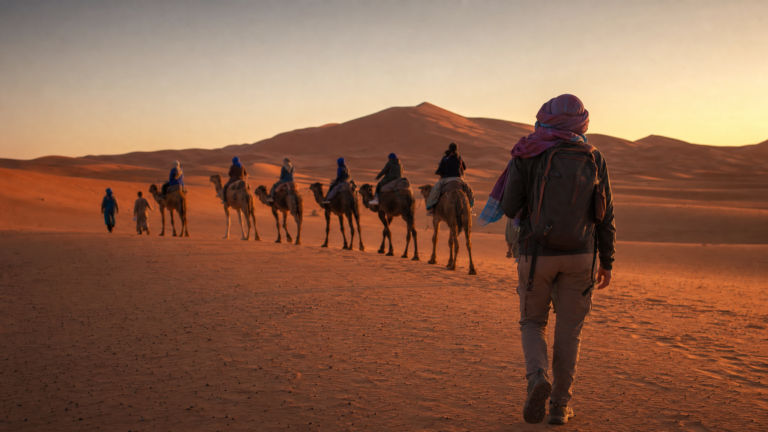
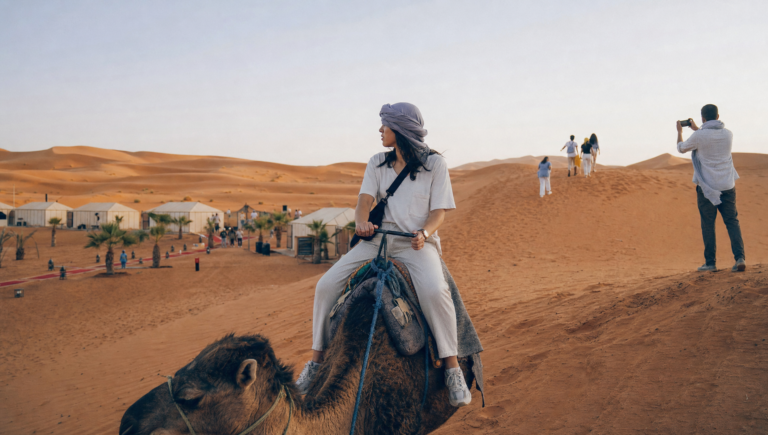
A fashion scarf isn’t the same as a proper shemagh (the traditional wrapped headscarf worn across the Sahara). If you’re doing a multi-day desert trip, buy or bring a full-length cotton scarf you can actually wrap around your head and lower face during wind and sandstorms — not just drape over your shoulders for photos. Most desert camps sell them, but it’s cheaper to bring your own from a souk stall in Marrakech first.
Spring, Summer, Autumn, Winter — what to pack by season
Spring (March–May), days 20–28°C / nights 10–16°C: Cotton T-shirts, lightweight trousers, a light sweater or thin jacket for evenings, sunglasses, sunscreen.
Summer (June–August), days 35–45°C / nights 22–28°C: Linen shirts, breathable trousers, long lightweight dresses, sandals, a wide-brim hat, and UV-rated sunglasses — the heat here is serious, and lightweight loose fabric matters more than in almost any other season.
Autumn (September–November), days 22–30°C / nights 12–18°C: Light layers, comfortable walking shoes, a thin jacket for cooler evenings. See our full Marrakech in fall guide for month-by-month detail.
Winter (December–February), days 15–22°C / nights 2–10°C: A warm fleece or insulated jacket, gloves, wool socks, a scarf, and waterproof shoes — nights get genuinely cold, especially outside the city.
Packing by destination
Marrakech: Comfortable sneakers (the medina is cobblestone and uneven), breathable clothing, sunglasses, sunscreen, a small day backpack.
Sahara Desert: Long sleeves and long trousers even in heat (sun and sand protection matter more than staying cool), a proper shemagh-style scarf, a warm layer for after sunset when temperatures drop fast, closed walking shoes rather than sandals, and a headlamp or flashlight for the camp at night.
Atlas Mountains: Hiking boots with real grip, moisture-wicking shirts (this is where synthetic fabric earns its place), a lightweight fleece, and a waterproof jacket — mountain weather changes fast regardless of season.
Atlantic Coast (Essaouira and beyond): A windbreaker — the coast is genuinely windier than Marrakech year-round — plus comfortable walking shoes and a light sweater for evenings.
What to wear culturally
Morocco is more relaxed about dress than people expect, especially in Marrakech’s tourist areas and hotels — but covering shoulders and knees is genuinely appreciated in the medina, souks, and any religious site. For women: loose dresses, linen trousers, maxi skirts and lightweight blouses all work well. For men: T-shirts, polos, and lightweight trousers are fine; going shirtless is fine at pools and beaches, not in the city.
What NOT to pack
- Heavy winter coats, unless you’re specifically doing Atlas Mountains in winter
- High heels — medina streets are cobblestone and uneven
- Bijoux de valeur
- Too many formal outfits — Morocco is a casual destination even in nicer restaurants
- A large hard-shell suitcase if you’re moving between cities — a duffel or soft bag is far easier in medina alleys and desert camp transfers
Electronics, toiletries and documents
Un adaptateur de voyage universel (le Maroc utilise les prises de type C et E), une batterie externe, une crème solaire SPF 50+, un répulsif anti-moustiques et tout médicament sur ordonnance accompagné d’une copie de celle-ci. Les pharmacies et supermarchés de Marrakech vendent la plupart des produits de toilette : inutile de surcharger de ce côté — mais emportez tout médicament dont vous dépendez, car les marques exactes ne sont pas garanties sur place.
For the full logistics — visas, currency, getting around — our first-timers guide covers what this list doesn’t.