Morocco Travel Tips Article
Morocco Packing List: What a Local Guide Actually Packs (Every Season)
MAby marrakeshexpresstour 5 min read

What to pack for Morocco, built from what our guides actually tell guests to bring — hammam essentials, real desert-scarf advice, and what to leave at home.
Most Morocco packing lists read the same because they’re written by people who’ve never actually run a desert tour or booked a hammam session here. This one’s different — it’s built from what our guides actually tell guests to bring, and it cuts the generic filler (“bring sunglasses,” “bring a reusable water bottle”) in favor of the things that genuinely trip people up.
Why cotton beats synthetic here
Marrakech’s heat is dry, not humid, which means moisture-wicking synthetic fabrics — great for humid climates — don’t actually cool you down here the way cotton and linen do. Pack cotton and linen as your default, and save synthetic hiking gear specifically for Atlas Mountains trekking, where you’re sweating on an incline rather than walking flat medina streets.
What to actually bring for a hammam visit
This gets left off almost every packing list, and it shouldn’t. Most traditional hammams don’t supply towels or flip-flops, so bring your own: a lightweight towel, rubber flip-flops (the floors are wet and can be slippery), and a change of underwear. If you’re booking a private hammam through your riad or a tour rather than a public neighborhood hammam, ask in advance what’s provided — it varies a lot more than people expect.
Cash beats cards in the souks
Bring more small-denomination dirham notes than you think you’ll need. Most souk stalls, street food vendors and shared taxis are cash-only, and negotiating a price is much smoother with cash in hand than with a “do you take cards” back-and-forth. ATMs are common in Gueliz and near Jemaa el-Fnaa, but budget for that walk when planning your day.
The desert scarf that actually works
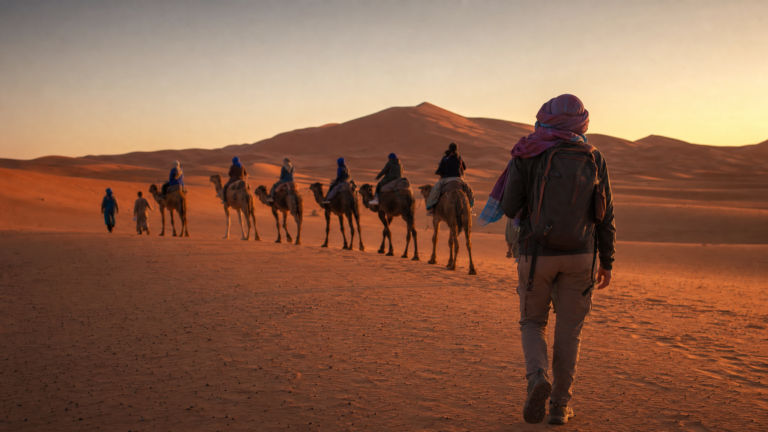
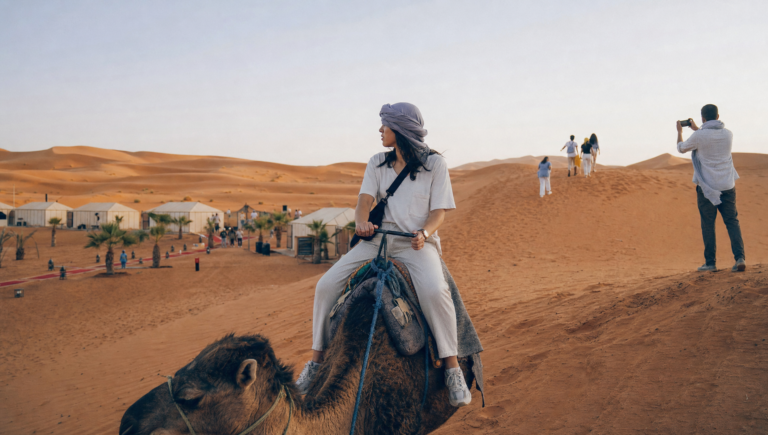
A fashion scarf isn’t the same as a proper shemagh (the traditional wrapped headscarf worn across the Sahara). If you’re doing a multi-day desert trip, buy or bring a full-length cotton scarf you can actually wrap around your head and lower face during wind and sandstorms — not just drape over your shoulders for photos. Most desert camps sell them, but it’s cheaper to bring your own from a souk stall in Marrakech first.
Spring, Summer, Autumn, Winter — what to pack by season
Spring (March–May), days 20–28°C / nights 10–16°C: Cotton T-shirts, lightweight trousers, a light sweater or thin jacket for evenings, sunglasses, sunscreen.
Summer (June–August), days 35–45°C / nights 22–28°C: Linen shirts, breathable trousers, long lightweight dresses, sandals, a wide-brim hat, and UV-rated sunglasses — the heat here is serious, and lightweight loose fabric matters more than in almost any other season.
Autumn (September–November), days 22–30°C / nights 12–18°C: Light layers, comfortable walking shoes, a thin jacket for cooler evenings. See our full Marrakech in fall guide for month-by-month detail.
Winter (December–February), days 15–22°C / nights 2–10°C: A warm fleece or insulated jacket, gloves, wool socks, a scarf, and waterproof shoes — nights get genuinely cold, especially outside the city.
Packing by destination
Marrakech: Comfortable sneakers (the medina is cobblestone and uneven), breathable clothing, sunglasses, sunscreen, a small day backpack.
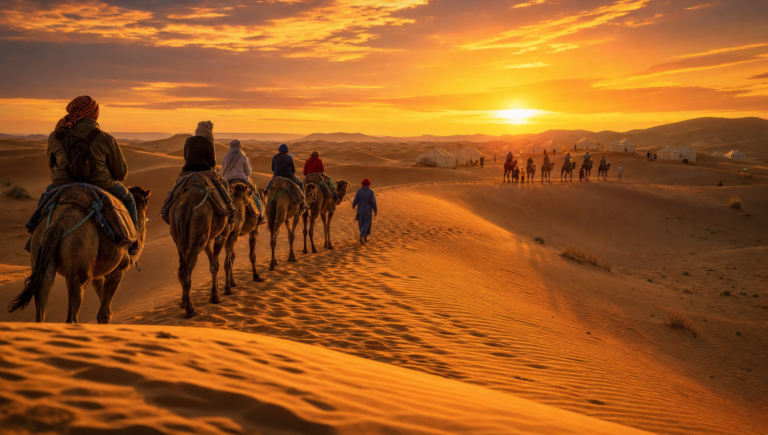
Sahara Desert: Long sleeves and long trousers even in heat (sun and sand protection matter more than staying cool), a proper shemagh-style scarf, a warm layer for after sunset when temperatures drop fast, closed walking shoes rather than sandals, and a headlamp or flashlight for the camp at night.
Atlas Mountains: Hiking boots with real grip, moisture-wicking shirts (this is where synthetic fabric earns its place), a lightweight fleece, and a waterproof jacket — mountain weather changes fast regardless of season.
Atlantic Coast (Essaouira and beyond): A windbreaker — the coast is genuinely windier than Marrakech year-round — plus comfortable walking shoes and a light sweater for evenings.
What to wear culturally
Morocco is more relaxed about dress than people expect, especially in Marrakech’s tourist areas and hotels — but covering shoulders and knees is genuinely appreciated in the medina, souks, and any religious site. For women: loose dresses, linen trousers, maxi skirts and lightweight blouses all work well. For men: T-shirts, polos, and lightweight trousers are fine; going shirtless is fine at pools and beaches, not in the city.
What NOT to pack
- Heavy winter coats, unless you’re specifically doing Atlas Mountains in winter
- High heels — medina streets are cobblestone and uneven
- Expensive jewelry
- Too many formal outfits — Morocco is a casual destination even in nicer restaurants
- A large hard-shell suitcase if you’re moving between cities — a duffel or soft bag is far easier in medina alleys and desert camp transfers
Electronics, toiletries and documents
A universal travel adapter (Morocco uses Type C and E plugs), a portable charger, sunscreen SPF 50+, insect repellent, and any prescription medication with a copy of the prescription. Pharmacies and supermarkets in Marrakech carry most toiletries, so don’t overpack there — but bring any specific medication you rely on, since exact brands aren’t guaranteed to be available.
For the full logistics — visas, currency, getting around — our first-timers guide covers what this list doesn’t.