Marrakech Guides Article
Hidden Doors of Marrakech: The Stories Behind the Medina’s Most Beautiful Entrances
MApar marrakeshexpresstour 3 min read
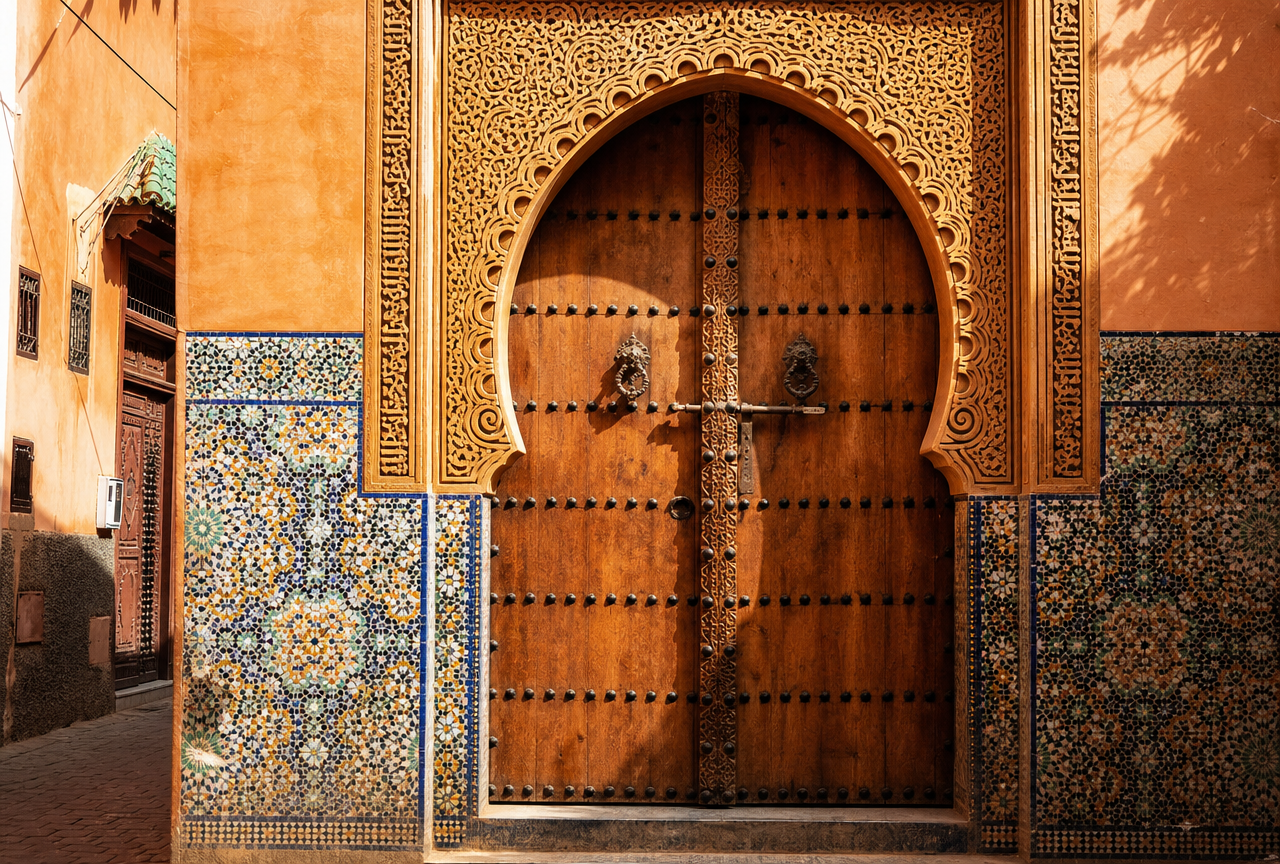
Marrakech's most beautiful doors hide behind plain walls — cedar carving, hand-forged iron and color symbolism explained, plus where to find them.
In the Medina, the plainest wall can hide the most spectacular building behind it. Marrakech’s traditional architecture turns everything inward — courtyards, fountains, tiled rooms — which means the door is often the only clue to what’s inside. Here’s how to actually read them.
More than just an entrance
Every door tells a story about craftsmanship, tradition and privacy. A grand, elaborately carved door usually signals a riad or a historic residence worth a second look, even from the outside.
The craftsmanship behind every door
Most traditional doors are cedar from the Atlas Mountains, hand-carved and paired with wrought iron detailing and brass hardware. You can still watch this craft in progress at Souk Chouari, where cedar woodworkers make furniture and carved pieces using the same techniques.
The language of colors
Green traditionally represents prosperity and is common on religious and civic buildings; blue conveys calm and is especially common in northern towns like Chefchaouen, though you’ll spot it here too. Natural wood tones are the most common choice for private residences, letting the carving itself do the talking.
Discovering hidden riads
A modest door can open onto a courtyard with a fountain, citrus trees and zellige tilework that gives no hint of its presence from the street. Many of these riads now operate as guesthouses — our first-timers itinerary has suggestions for staying in one rather than just passing by.
Doors that lead to creativity
Some of the most interesting doors lead into working artisan spaces rather than homes — small workshops where you can watch woodworking, metalwork or textile weaving in progress, the same traditions covered in our craft traditions guide.
A photographer’s dream
Early morning and late afternoon give the most flattering light and the fewest people in frame. Look for contrast — a weathered blue door against sun-bleached ochre walls tends to photograph best.
Respecting local homes
Many of these doors belong to private residences, not attractions. Photograph from the public street, don’t knock or try doors that aren’t clearly open to visitors, and be mindful that you’re walking through someone’s neighborhood, not a museum.
Why these doors define Marrakech
More than any single monument, the doors capture what makes the Medina work — privacy and beauty held in tension, everything valuable turned inward. A slow wander through the residential alleys, away from the main tourist routes, is the best way to actually see this rather than just the well-known landmarks. Our Marrakech After Dark guide covers a different side of the same instinct — going beyond the obvious stops.