

Marrakech to Fes in 3 Days: A Journey Through the Atlas Mountains, Sahara & Morocco’s Hidden Landscapes

Introduction
What if the journey between Marrakech and Fes could be one of the most memorable parts of your Morocco vacation?
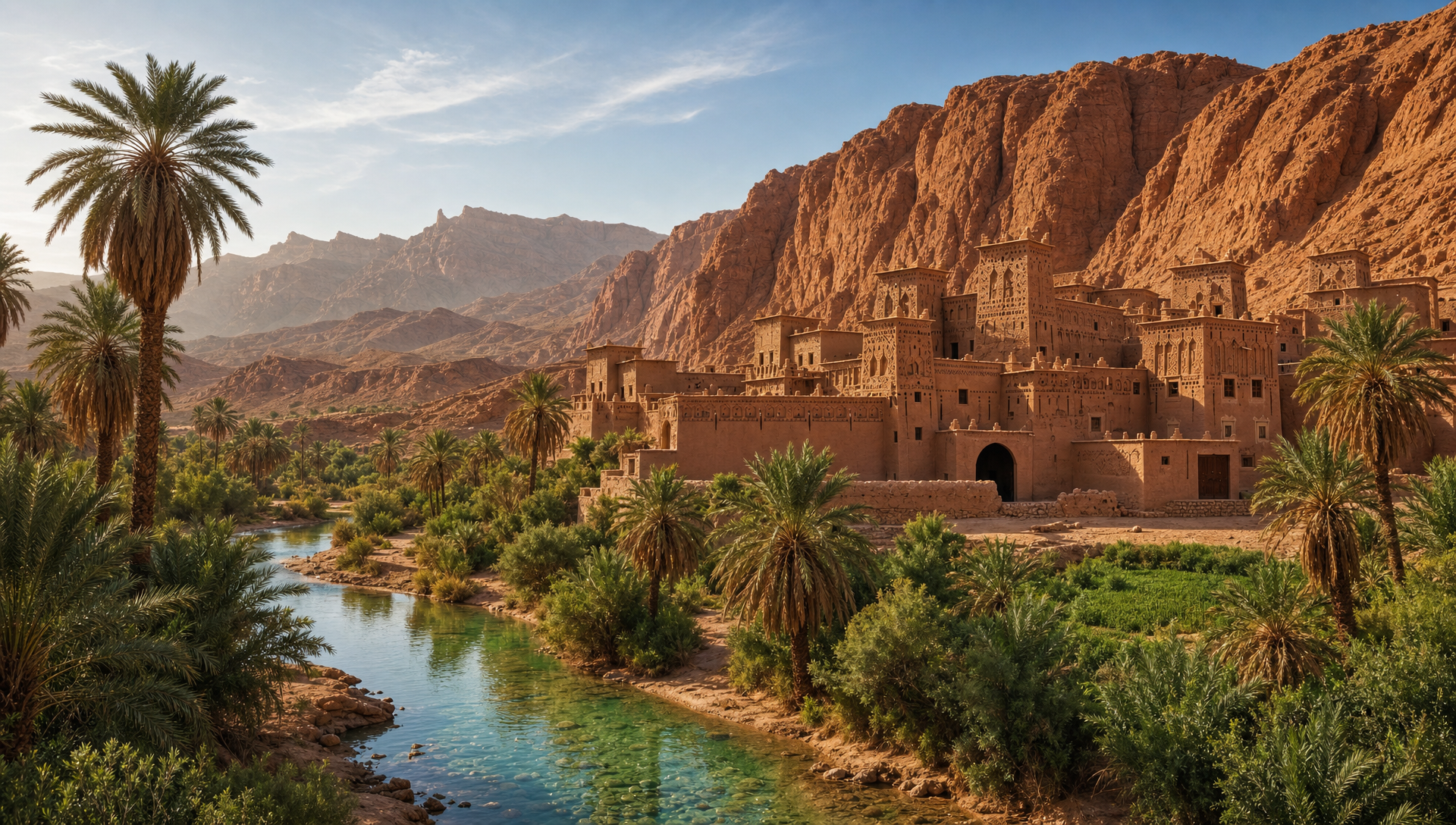
Instead of simply traveling from one imperial city to another, a three-day route can turn the distance between them into an extraordinary Moroccan adventure. The journey crosses the High Atlas Mountains, passes ancient kasbahs and dramatic valleys, reaches the golden dunes around Merzouga, and continues north through the Middle Atlas before arriving in Fes.
The route is demanding, with long days on the road, but the reward is seeing several completely different sides of Morocco in one journey. Current route guides describe the Marrakech–Fes desert crossing as roughly 1,100 km overall, with particularly long driving days, so it works best as a carefully planned private journey rather than a rushed transfer.
Day 1: Marrakech → High Atlas → Aït Benhaddou → Dades Valley
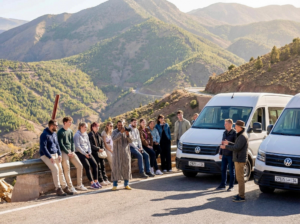
Your adventure begins by leaving Marrakech behind and heading toward the High Atlas Mountains.
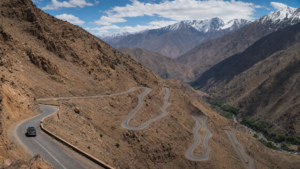
The landscape quickly changes as the road climbs through spectacular mountain scenery. One of the highlights is the Tizi n’Tichka mountain pass, which reaches around 2,260 meters and provides dramatic views across the Atlas landscape.
This is a perfect part of the journey to slow down, stop for photographs, and appreciate how dramatically Morocco’s scenery changes within a few hours.
Aït Benhaddou: Step Into Morocco’s Cinematic Past
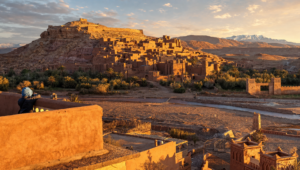
After crossing the mountains, continue toward Aït Benhaddou, one of Morocco’s most famous fortified settlements.
The earthen architecture, narrow passages, towers, and surrounding landscape make it one of the most atmospheric stops on the route. It has also appeared in numerous film and television productions, adding to its cinematic reputation.
Take time to walk through the historic settlement rather than simply stopping for a photograph. The details of the mud-brick architecture are best appreciated on foot.
Through Ouarzazate and the Valley of Roses
Continue toward Ouarzazate before heading east through the landscapes of southern Morocco.
As the route progresses, the scenery becomes increasingly dramatic. Rocky mountains, palm-filled valleys, traditional villages, and ancient kasbahs create a constantly changing backdrop.
Eventually, you’ll reach the Dades Valley, where the first day comes to an end.
Day 2: Dades Valley → Todra Gorge → Merzouga
Wake up surrounded by the rugged scenery of the Dades Valley before continuing toward one of Morocco’s most impressive natural attractions: Gorges du Todra.
The journey itself is part of the experience, with the landscape changing from green valleys to enormous rock formations.
Walk Through Todra Gorge
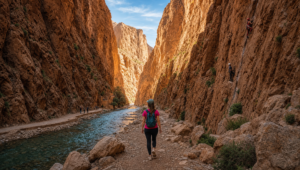
Todra Gorge is famous for its towering limestone cliffs and narrow canyon.
Rather than simply viewing the gorge from your vehicle, take some time to walk through the canyon and appreciate the scale of the surrounding cliffs.
It is one of those places where photographs rarely communicate how impressive the landscape feels in person.
Continue Toward the Sahara
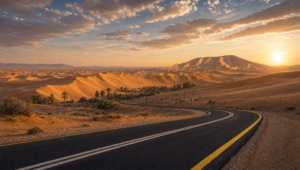
After Todra Gorge, the landscape gradually becomes drier as you travel toward Merzouga.
The road passes through desert plateaus and palm-filled valleys before eventually revealing the first golden dunes of Erg Chebbi.
This is the moment when the journey suddenly feels completely different.
The mountains disappear behind you, and the vast Sahara begins to dominate the horizon.
Sunset in Merzouga
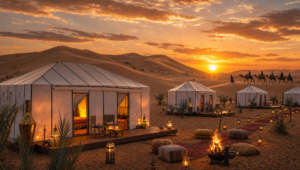
Arriving in Merzouga in the afternoon gives you time to experience one of the most memorable moments of the entire route: sunset over the dunes.
A camel trek or another organized transfer can take you toward your desert camp, where you can watch the changing colors of the sand as the sun disappears.
The desert becomes remarkably quiet after sunset, creating the perfect atmosphere for an evening beneath the stars.
A Night Beneath the Sahara Sky
Your night in the desert is what makes this route more than just a road trip.
After dinner, step outside your camp and look toward the sky. Away from major cities, the desert offers a spectacular setting for stargazing.
A comfortable private camp can make the experience even more memorable, combining traditional Moroccan hospitality with a peaceful desert setting.
Day 3: Merzouga → Middle Atlas → Ifrane → Fes
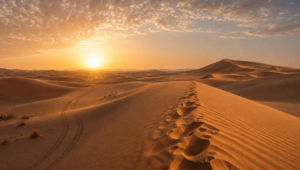
Wake early for sunrise over the dunes.
The soft morning light creates long shadows across the sand, making sunrise one of the best moments for photography.
After breakfast, the journey continues north toward Fes.
From Desert to Forest
One of the fascinating aspects of this final day is how dramatically the landscape changes.
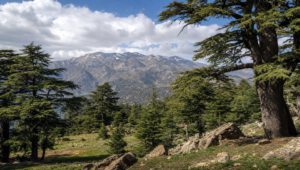
After leaving the desert, the route moves toward the Middle Atlas. Eventually, the dry landscape gives way to greener mountain scenery and cedar forests.
The contrast is remarkable: just a short time earlier you were surrounded by Sahara dunes, and now you’re traveling through a completely different environment.
A Stop in Ifrane
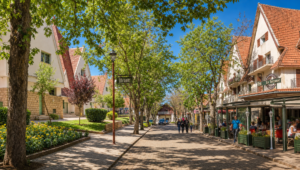
Ifrane offers another unexpected change of scenery.
Known for its alpine-style architecture and mountain setting, the town feels very different from Marrakech, Merzouga, or the traditional villages of southern Morocco.
A short stop here can provide a refreshing break before the final drive toward Fes.
Arriving in Fes
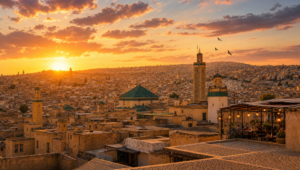
By the end of the third day, you’ll arrive in Fes, Morocco’s historic cultural heart.
After three days of changing landscapes, the ancient Medina feels like another world once again. Its narrow streets, traditional workshops, historic architecture, and lively souks provide the perfect ending to a journey across Morocco.
And that’s what makes this route so special: Marrakech and Fes aren’t simply the starting and finishing points. The landscapes between them are the real adventure.
Why Choose a Private Marrakech to Fes Journey?
A private journey is particularly useful for this route because the days are long and the itinerary covers a large distance.
With private transportation, you can stop for photographs, spend more time at places that interest you, and adjust the pace when possible. You also avoid returning to Marrakech simply to continue toward Fes.
The one-way route turns transportation into part of the holiday itself—a point also highlighted by current 3-day route guides.
Is 3 Days Enough?
Three days is possible, but it is important to understand what you’re choosing.
This is an adventure itinerary, not a slow-paced holiday. The route involves substantial driving, with some current guides estimating around 8–10 hours of road time on certain days.
If you have more time, adding an extra night around the desert or Dades/Todra region will make the journey more relaxed.
But if your schedule is limited and you want to combine Marrakech, the Sahara, and Fes, three days creates an incredible cross-country experience.
What Makes This Journey Special?
In only three days, you experience an extraordinary sequence of landscapes:
Marrakech → High Atlas Mountains → Aït Benhaddou → Dades Valley → Todra Gorge → Merzouga → Sahara Desert → Middle Atlas → Ifrane → Fes
Few journeys offer such a dramatic transformation in such a short time.
You begin among the red walls of Marrakech, cross high mountain passes, discover ancient kasbahs, walk through dramatic gorges, sleep among Sahara dunes, pass through mountain forests, and finish inside one of Morocco’s greatest historic cities.
Pour conclure
A three-day Marrakech to Fes journey is much more than a transfer between two Moroccan cities.
It is a miniature adventure through the country’s incredible diversity.
Every morning brings a new landscape. Every road reveals another side of Morocco. And by the time you arrive in Fes, you’ll have experienced mountains, valleys, kasbahs, canyons, desert, and forest—all in one unforgettable journey.
If you’re looking for a Morocco itinerary that combines adventure, culture, landscapes, and the Sahara Desert, this route deserves a place on your travel plans.
Frequently asked questions
Can you travel from Marrakech to Fes in 3 days?
Yes. A three-day private route can connect Marrakech and Fes through the High Atlas Mountains, Au00eft Benhaddou, Dades Valley, Todra Gorge, Merzouga, and the Middle Atlas.
Is the Marrakech to Fes desert route worth it?
Yes. The route turns the journey between two major Moroccan cities into an adventure through mountains, valleys, gorges, desert dunes, and traditional villages.
How far is Marrakech from Fes via the Sahara Desert?
The desert route is substantially longer than the direct connection, with current itinerary guides putting the overall journey at roughly 1,100 km depending on the exact route and stops.
Where do you sleep on a 3-day Marrakech to Fes tour?
A typical itinerary spends the first night around the Dades Valley and the second night at a desert camp near Merzouga before continuing to Fes.
What are the main stops between Marrakech and Fes?
Major highlights include the High Atlas Mountains, Tizi n'Tichka, Au00eft Benhaddou, Ouarzazate, Dades Valley, Todra Gorge, Merzouga, the Middle Atlas, and Ifrane.
Is 3 days enough for the Marrakech to Fes desert tour?
Three days is enough for travelers with limited time, but the itinerary involves long driving days. Travelers who prefer a slower pace should consider extending the journey.
What is the best time for a Marrakech to Fes desert trip?
Spring and autumn are generally excellent seasons because temperatures are more comfortable for exploring cities, mountains, gorges, and the desert.