Marrakech Guides Article
A Guide to Marrakech’s Craft Traditions and Artisan Heritage
MAby marrakeshexpresstour 3 min read
Which Medina district makes which craft — from the Dyers' Souk to the tanneries to Place des Ferblantiers' lantern-makers — and how to buy the genuine handmade version.
Marrakech’s Medina hasn’t always organized its crafts randomly — certain trades have clustered in the same streets for centuries, and knowing which is which turns a walk through the souks from browsing into actually seeing how things are made. This is the craft-by-craft guide to what’s made where, and how to tell the handmade version from the imported one.
Carpets and Berber rugs — the dyers’ quarter
Handwoven, mostly by Berber women in villages across the Atlas and pre-Sahara regions, then brought into the city to sell. Look for irregularities in the weave and knot pattern — that’s a sign of handwork, not a flaw. Near the tanneries, the Dyers’ Souk (Souk Sebbaghine) is where you’ll still see wool being dyed in large vats by hand, in the same colors used in the carpets sold nearby.
Leather goods — Souk Cherratine and the tanneries
Bags, babouches (traditional slippers), belts and wallets, hand-tanned using vegetable-based methods that haven’t changed much in centuries. Souk Cherratine is the traditional leather-goods souk; visiting the tanneries themselves (early morning is best, before the smell and heat build up) shows the actual dyeing and treating process before the leather ever reaches a stall.
Pottery and ceramics
Hand-painted bowls, tagines and vases, often in the blues and greens associated with Fes and Safi ceramics traditions, sold throughout the Medina and especially around Place des Ferblantiers and the Mellah area. Ask whether a piece is hand-painted or stenciled — both are sold as “traditional,” but only one is.
Brass, copper and lanterns — Place des Ferblantiers
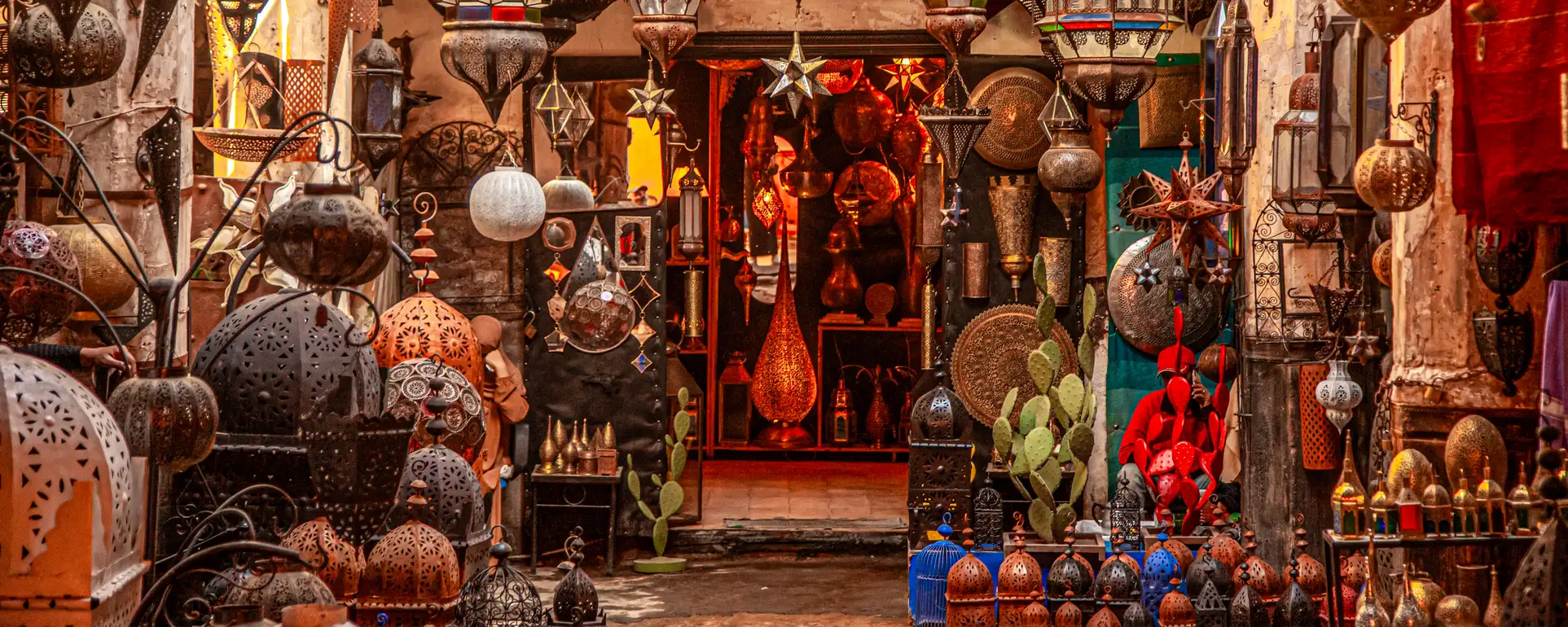
This square, just outside the Badi Palace, is the traditional home of Marrakech’s metalworkers and lantern-makers, still visibly hammering and piercing brass and copper by hand into the perforated lanterns the city is known for.
Wood carving
Cedar from the Atlas Mountains, hand-carved into furniture, doors, boxes and mirrors with the same floral and geometric motifs found in the city’s historic buildings — the Ben Youssef Madrasa’s woodwork is a good reference point for the style before you shop for it.
Textiles
Cotton, wool, and cactus silk (sabra) woven into scarves, blankets and cushions. Cactus silk in particular is a distinctly Moroccan material worth asking about specifically — it has a natural sheen synthetic substitutes don’t.
Jewelry
Berber silver work varies by region — pieces from the Atlas, the Sahara-adjacent south, and the Rif in the north each carry distinct symbolism and technique. Worth asking a seller where a specific piece’s style originates rather than treating “Berber jewelry” as one style.
Argan oil and natural cosmetics
Argan oil is a genuine Moroccan specialty, cold-pressed from a tree that grows almost nowhere else in the world — but it’s also the most commonly diluted or relabeled souvenir in the souks. The clearest sign of authenticity is a cooperative name and certification on the label, not just “100% pure” packaging.
How to buy the real thing
- Buying directly from a workshop, where you can see the work happening, is the most reliable way to know something is genuinely handmade.
- Bargaining is normal and expected — see our full souks guide for a rough price-range starting point by item type.
- Ask how something was made. A vague answer is a reasonable sign to keep browsing.
- Large items (carpets, furniture) can usually be shipped — ask before you buy, not after.
Want a guided route through the artisan quarters instead of finding them on your own? Design a custom Medina tour built around the crafts you actually want to see made.