

Fes to Marrakech in 3 Days: A Journey Through Morocco’s Mountains, Sahara & Kasbahs

Introduction
The journey from Fes to Marrakech doesn’t have to be just a transfer between two of Morocco’s most famous cities.
Take three days and the road itself becomes the adventure.
Instead of flying or taking the most direct route, you can travel south through the Middle Atlas, pass through cedar forests and mountain landscapes, descend toward the Sahara, spend a night among the dunes of Merzouga, then continue west through dramatic gorges and ancient kasbahs before crossing the High Atlas and arriving in Marrakech.
This one-way route is especially appealing because you don’t simply retrace the same roads. You experience a constantly changing Morocco—from green mountain forests to desert dunes and finally the red landscapes surrounding Marrakech. Recent route guides also highlight the one-way format as a practical way to connect Fes and Marrakech while turning the journey itself into part of the trip.
Day 1: Fes → Ifrane → Cedar Forests → Midelt → Merzouga
Your journey begins in Fes, leaving the historic Medina behind and heading toward the Middle Atlas Mountains.
The first part of the route offers a surprising change of scenery. Morocco’s famous desert landscape is still far away, and the road climbs into cooler mountain surroundings.
A Morning in Ifrane
One of the first memorable stops is Ifrane.
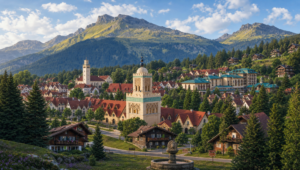
With its distinctive alpine-style architecture and mountain setting, Ifrane feels remarkably different from Fes. It is an excellent place to stretch your legs, enjoy a coffee or simply appreciate the change in landscape.
From here, the road continues toward the cedar forests around Azrou.
Through the Cedar Forests
As you continue south, the landscape becomes increasingly wooded.
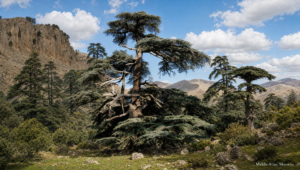
The cedar forests of the Middle Atlas provide one of the most unexpected scenes on this route. Depending on conditions and location, travelers may also encounter Barbary macaques in the forest.
The contrast is remarkable: you’re traveling toward the Sahara, yet the landscape around you is green, mountainous, and cool.
Midelt and the Road Toward the Desert
After the mountains, the landscape begins to open.
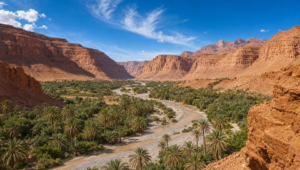
Midelt provides a natural break before the route continues toward the Ziz Valley. Gradually, the scenery becomes drier, the mountains turn more rugged, and palm-filled valleys begin appearing between the rocks.
This gradual transformation is one of the best parts of the journey.
You don’t simply arrive in the desert—the landscape slowly introduces it to you.
Arriving in Merzouga
By late afternoon, the landscape changes once again.
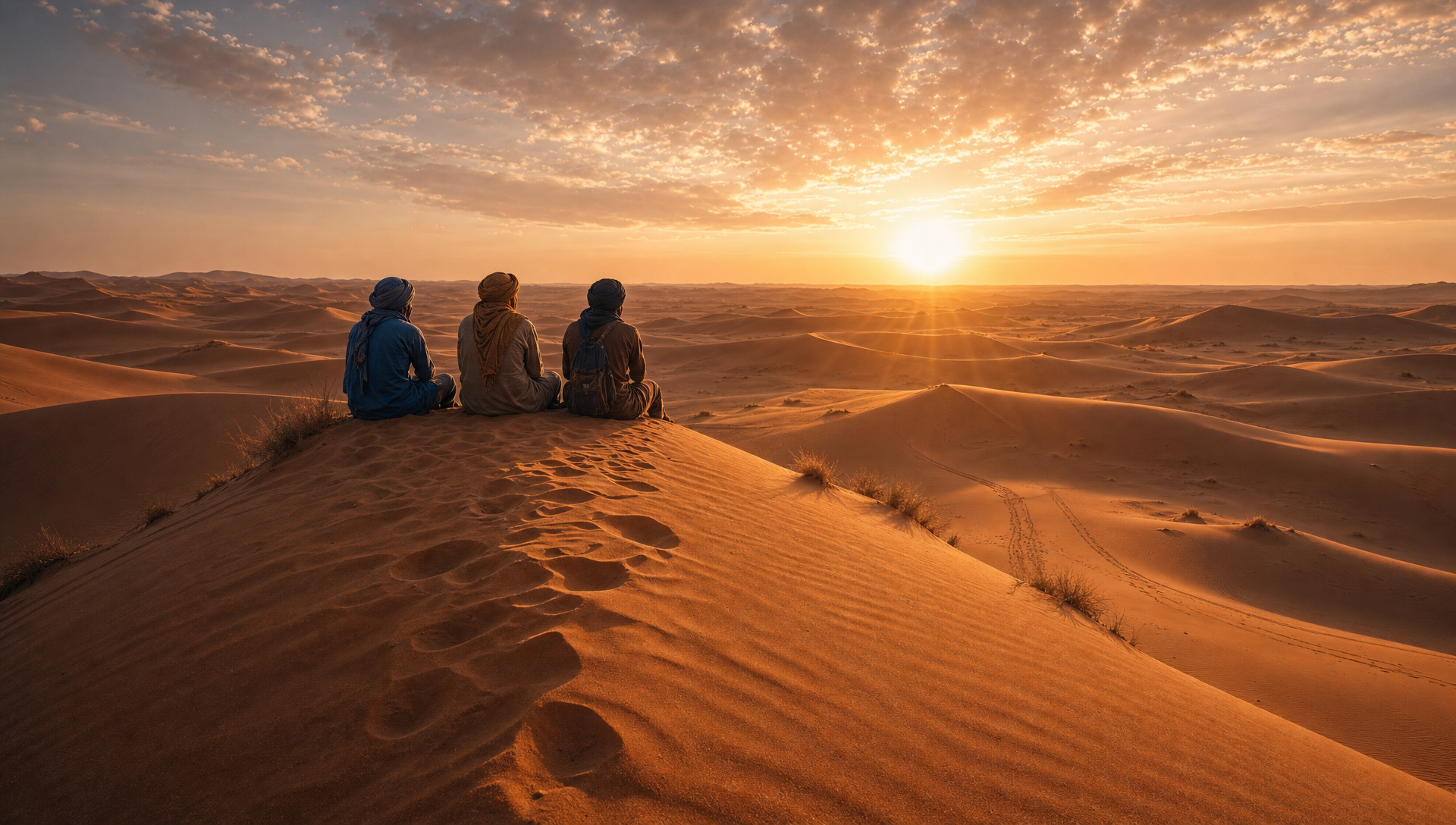
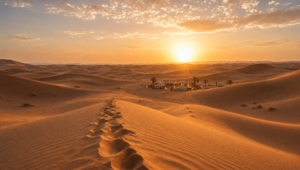
The first golden dunes of Erg Chebbi appear around Merzouga, marking the beginning of the Sahara experience.
After a long day of travel, reaching the dunes feels like arriving in another world.
Sunset Over the Sahara
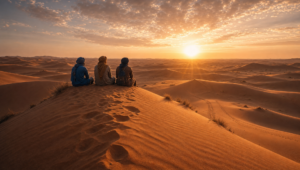
One of the highlights of the journey is watching the sunset across the dunes.
Depending on your itinerary, you may reach your camp by camel trek or another organized desert transfer. Once you’re surrounded by the dunes, take time to simply enjoy the silence.
As the sun drops lower, the sand changes from gold to orange and deep red.
It’s the kind of moment that makes the long journey worthwhile.
A Night in a Desert Camp
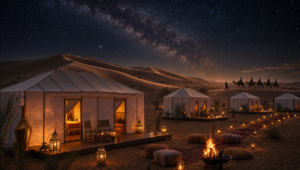
After sunset, continue to your desert camp for dinner and an evening beneath the stars.
A comfortable camp can combine traditional Moroccan hospitality with modern touches, creating a memorable overnight experience without losing the feeling of being surrounded by the desert.
Wake up early if you can—the sunrise is just as spectacular as the sunset.
Day 2: Merzouga → Rissani → Todra Gorge → Dades Valley
Start the second day with sunrise over the dunes.
After breakfast, leave Merzouga and continue west toward the dramatic landscapes of eastern Morocco.
The route passes through Rissani and continues toward the Todra Valley.
Discover Todra Gorge
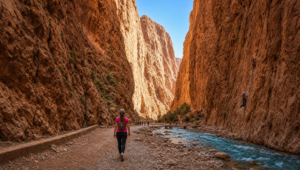
Todra Gorge is one of the most dramatic natural landscapes on the journey.
Towering limestone cliffs rise on both sides of the narrow canyon, creating an impressive corridor through the mountains.
Take a walk through the gorge and enjoy the change of pace after the long desert drive. The contrast between the open Sahara and the enclosed canyon is remarkable.
Continue Through Dades Valley
From Todra Gorge, continue toward Dades Valley.
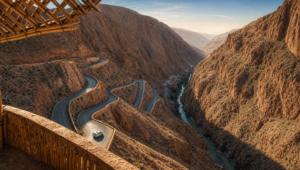
The landscape becomes a mixture of red rock formations, green agricultural areas, palm groves, and traditional villages.
The famous winding road above the valley is one of the most recognizable viewpoints in southern Morocco.
A Peaceful Night in the Valley
After another full day, spend the night in a traditional guesthouse or boutique accommodation around Dades.
This is a chance to slow down, enjoy a Moroccan dinner, and rest before the final stage of the journey.
The second night is intentionally different from the Sahara: instead of endless dunes, you’ll wake surrounded by mountains and valleys.
Day 3: Dades Valley → Ouarzazate → Aït Benhaddou → High Atlas → Marrakech
The final day takes you west toward Marrakech.
You’ll pass through the Valley of Roses and continue toward Ouarzazate, often associated with Morocco’s film industry and southern kasbah architecture.
From here, one of the journey’s most important cultural stops awaits.
Aït Benhaddou: A Moroccan Architectural Treasure
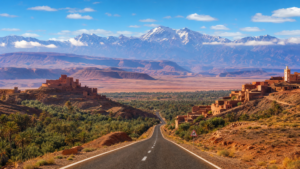
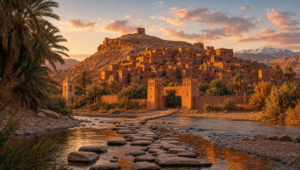
Aït Benhaddou is one of the most recognizable historic settlements in southern Morocco.
Its earthen buildings, towers, narrow passages, and dramatic position beside the former caravan route make it an extraordinary place to explore on foot.
Allow enough time to walk through the settlement rather than viewing it only from the road.
Crossing the High Atlas Mountains
After Aït Benhaddou, the route begins climbing toward the High Atlas.
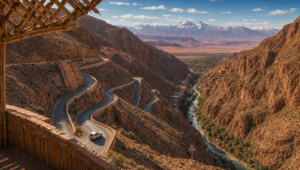
The scenery becomes increasingly mountainous as the road approaches the Tizi n’Tichka pass. The pass reaches around 2,260 meters and is one of the defining mountain crossings between southern Morocco and Marrakech.
Make time for scenic stops along the way. The views across the mountains and valleys provide a dramatic final chapter to the journey.
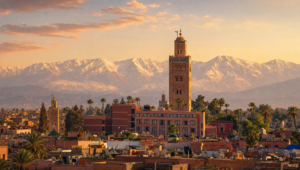
Arriving in Marrakech
As you descend from the mountains, the landscape gradually changes again.
The red earth, palm trees, villages, and eventually the urban energy of Marrakech signal the end of the journey.
After three days of mountains, forests, desert, gorges, valleys, and kasbahs, arriving in the Red City feels like reaching the final chapter of an extraordinary Moroccan road story.
Why Choose the Fes to Marrakech Route?
The biggest advantage is that the journey becomes part of your Morocco experience.
Instead of spending a travel day simply moving between cities, you discover completely different landscapes along the way.
The classic three-day route can include:
Fes → Ifrane → Middle Atlas → Midelt → Ziz Valley → Merzouga → Todra Gorge → Dades Valley → Ouarzazate → Aït Benhaddou → High Atlas → Marrakech
Recent route guides describe this as the classic one-way crossing, with the desert night providing the centerpiece of the experience.
Is Three Days Enough?
Three days works well if you have limited time and want to experience the highlights.
However, it is important to understand that this is an active itinerary with substantial driving. Current route information describes some long travel days, so travelers who prefer slower mornings, longer walks, or additional cultural stops may want to extend the journey to four days.
The advantage of a private itinerary is flexibility. You can build in scenic stops, photography breaks, meals, and short walks rather than treating the journey as a simple point-to-point transfer.
What to Pack for the Journey
Because the landscape and temperatures change dramatically, layers are useful.
Bring:
- Comfortable walking shoes
- Light layers for changing temperatures
- A warmer layer for the desert evening
- Sunglasses and sun protection
- A small overnight bag for the desert camp
- Camera or smartphone
- Reusable water bottle
Keeping a small bag accessible is especially convenient when your main luggage remains in the vehicle.
The Real Luxury Is the Journey
A Fes to Marrakech road trip isn’t about reaching the destination as quickly as possible.
It’s about looking through the window and watching Morocco transform.
Forest becomes mountain.
Mountain becomes valley.
Valley becomes desert.
Desert becomes canyon.
Canyon becomes kasbah.
And finally, the High Atlas gives way to Marrakech.
That constant transformation is what makes this three-day journey so special.
Final Thoughts
Fes and Marrakech may be two of Morocco’s most famous cities, but the landscapes between them deserve just as much attention.
A three-day journey through the Middle Atlas, Sahara, Todra Gorge, Dades Valley, Aït Benhaddou, and High Atlas turns a simple transfer into one of the most memorable experiences you can add to a Morocco itinerary.
You don’t simply travel from Fes to Marrakech.
You cross Morocco.
Frequently asked questions
Can you travel from Fes to Marrakech in 3 days?
Yes. A three-day private journey can connect Fes and Marrakech through the Middle Atlas, Merzouga, the Sahara Desert, Todra Gorge, Dades Valley, Au00eft Benhaddou, and the High Atlas Mountains.
Is the Fes to Marrakech desert route worth it?
Yes. The route combines mountains, cedar forests, desert dunes, dramatic gorges, historic kasbahs, and two of Morocco's most famous cities in one memorable journey.
Where do you sleep on a 3-day Fes to Marrakech tour?
A typical itinerary includes one night at a desert camp near Merzouga and a second night in accommodation around Dades Valley.
What are the main stops between Fes and Marrakech?
Major stops can include Ifrane, the Middle Atlas cedar forests, Midelt, the Ziz Valley, Merzouga, Todra Gorge, Dades Valley, Ouarzazate, Au00eft Benhaddou, and the Tizi n'Tichka pass.
Is three days enough for a Fes to Marrakech desert tour?
Three days is suitable for travelers with limited time, but the itinerary includes long driving days. Four days is better for travelers who prefer a slower pace.
What is the highlight of the Fes to Marrakech journey?
For many travelers, the highlight is spending a night in the Merzouga desert, but the changing scenery from the Middle Atlas to the Sahara and High Atlas makes the entire route special.
When is the best time for a Fes to Marrakech desert trip?
Spring and autumn are generally comfortable seasons for combining city sightseeing, mountain travel, and desert experiences across Morocco.