Destinations Article
Chefchaouen at Dawn: The Blue City Before the Crowds Arrive
MAby marrakeshexpresstour 4 min read
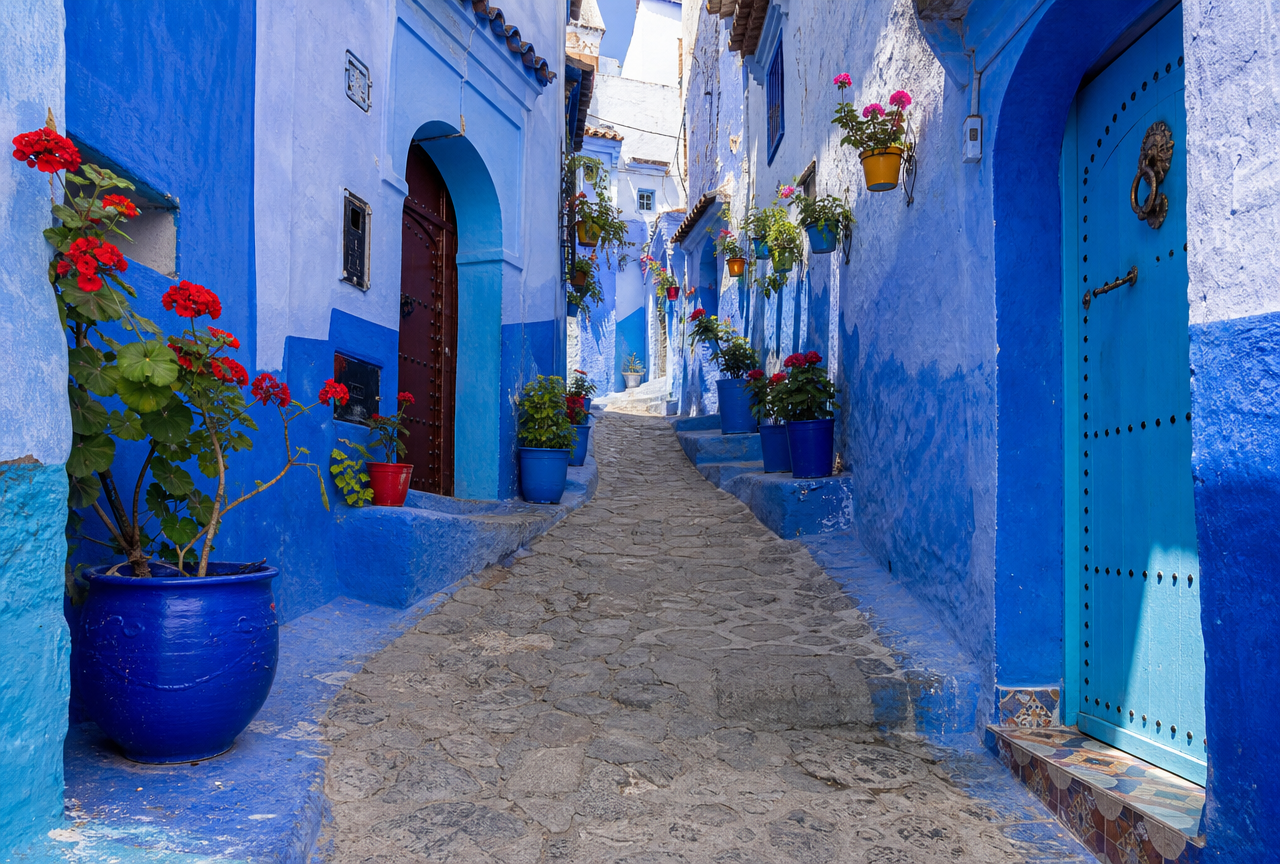
Chefchaouen at sunrise — quiet blue streets, soft light, and how to actually get there from Marrakech to see it before the crowds do.
By 9am, Chefchaouen belongs to the day-trippers — tour groups working through the same three photo spots, vendors calling out, the narrow streets bottlenecking at the prettiest corners. Two hours earlier, it’s a completely different town. Here’s what that window actually looks like, and what it takes to be there for it.
A town painted in silence
At 6am the loudest thing in the medina is a shutter rolling up somewhere out of sight. The blue paint — ranging from near-white to deep indigo depending on the wall and how recently it’s been touched up — looks almost matte in the low light, before the sun bleaches it flatter later in the day. You can hear your own footsteps on the stone underfoot, which never happens once the crowds arrive.
The morning light changes everything
Low, angled sunlight catches the texture of the walls — brushstrokes, patched plaster, the uneven blue that a midday photo flattens into a single tone. Photographers who know the town well plan their entire visit around the hour after sunrise specifically for this; by 10am the light goes hard and flat and the same corners photograph noticeably worse.
Explore the medina at your own pace
Without a crowd to funnel around, you can actually stop mid-alley to look at a doorway or duck down a side passage on a whim — something that’s nearly impossible once the narrow streets fill up. Getting mildly lost is part of the appeal; the medina is small enough that you’ll always find your way back within twenty minutes.
Meet the town before it gets busy
This is when you actually see residents rather than performers for tourists — a baker pulling the first round loaves of the day, someone sweeping the step outside a blue-painted door, cats claiming the warmest patch of sun before anyone else is awake to compete for it.
A perfect time for relaxation
Find a café just opening its shutters and take the first table with a view down an alley. There’s no rush here yet — no queue forming, no one waiting for your seat — which is rare enough on a Morocco itinerary to be worth building a morning around on its own.
The best view comes after the walk
The Spanish Mosque sits on a hillside above town, reached by a 20-30 minute uphill walk that starts right from the edge of the medina. From the top, the blue streets read as a single sprawling pattern against the brown hills behind them — genuinely worth the climb, and best timed for just after sunrise, once you’ve had time in the empty streets below first.
How to actually get to Chefchaouen
Chefchaouen sits in the Rif Mountains in northern Morocco — this is not a day trip from Marrakech. The drive is roughly 8-9 hours, which is why it’s almost always visited as part of a longer northern circuit, commonly paired with Fes and Tangier, rather than tacked onto a Marrakech-based trip. If Chefchaouen matters to you, plan a proper multi-city itinerary around it rather than trying to squeeze it in; our best places to visit in Morocco guide covers how it fits into a 10-14 day route. Our custom tour builder can work it into a longer route if you’re planning beyond Marrakech.
What to pack
The Rif Mountains run noticeably cooler and wetter than Marrakech year-round, and dawn temperatures here can catch people off guard if they’ve packed only for the south — bring a real layer, not just a light scarf. Our full packing list has the regional breakdown.
Tips for experiencing Chefchaouen at dawn
Stay overnight inside the medina itself, not in a hotel outside it — dawn only works if you’re already there when it happens, and even a short walk in from the edge of town eats into the quiet window. Set your alarm for first light rather than sunrise itself; the streets are often at their emptiest in the half hour before the sun actually clears the hills. Save the Spanish Mosque climb for after you’ve had time in the empty streets below — the view is better once you’ve already seen what it’s a view of.