
The Ultimate Morocco Packing List: What to Bring for Every Season
Introduction
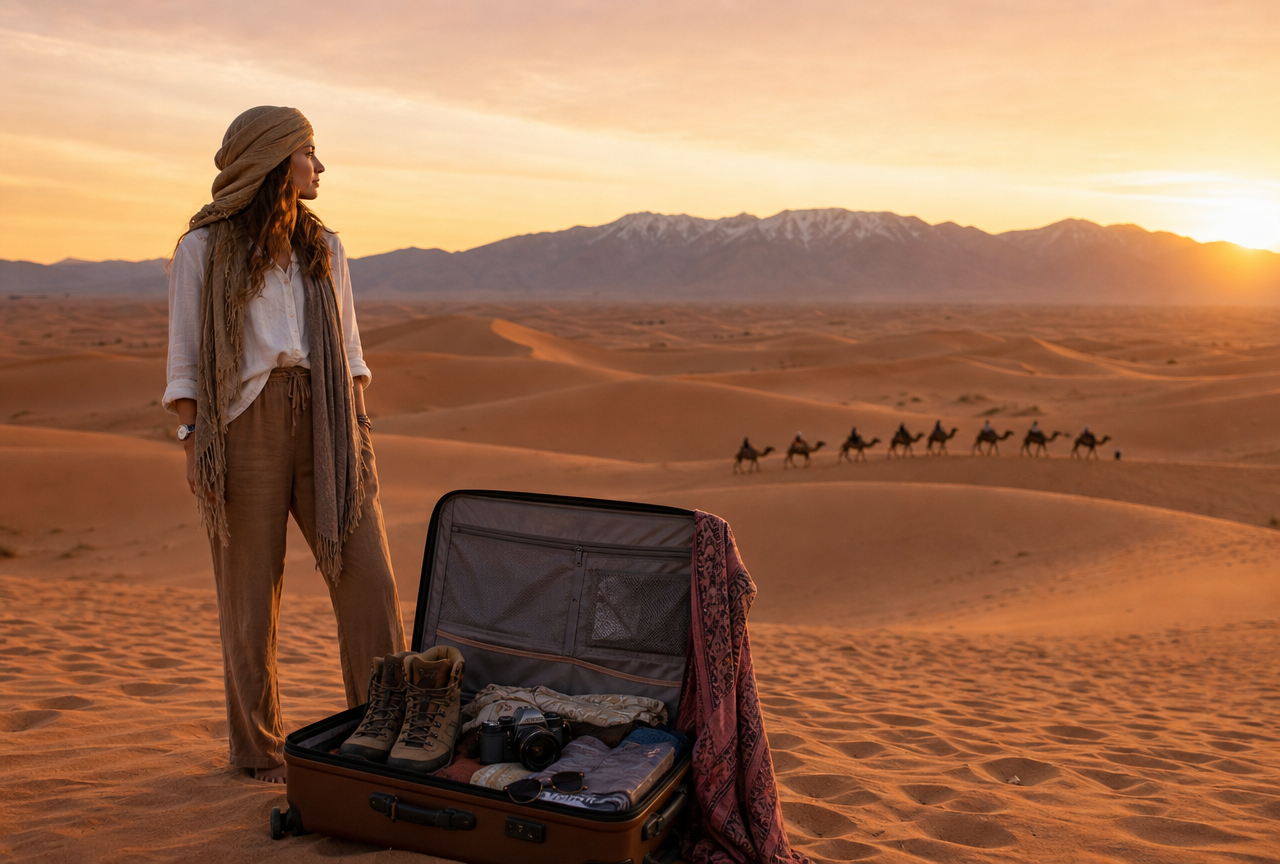
Packing for Morocco isn’t as simple as packing for a beach vacation or a European city break. One day you might be wandering through the colorful souks of Marrakech, the next hiking in the Atlas Mountains, riding camels across the Sahara Desert, or enjoying fresh seafood on the Atlantic coast. Each region has its own climate, culture, and activities, which means your suitcase should be just as versatile as your itinerary.
The good news? With a little planning, packing for Morocco is easy. Whether you’re visiting in spring, summer, autumn, or winter, this guide covers everything you need to bring—from clothing and footwear to travel documents, electronics, toiletries, and destination-specific essentials.
By the end of this guide, you’ll know exactly what to pack so you can travel comfortably, respect local customs, and make the most of every unforgettable moment in Morocco.
Why Packing for Morocco Is Different
Morocco is one of the few destinations where you can experience several climates in a single trip. Within just a few days, you could be walking through warm desert landscapes, hiking cool mountain trails, exploring vibrant cities, and relaxing on breezy Atlantic beaches.
Because of this diversity, packing the right combination of clothing and accessories is essential. The key is to focus on lightweight layers that can easily adapt to changing temperatures throughout the day.
Another important consideration is local culture. Morocco is a welcoming and modern destination, but dressing respectfully—especially in traditional neighborhoods and rural areas—helps you blend in and feel more comfortable during your travels.
The Ultimate Morocco Packing Checklist
Before diving into seasonal recommendations, let’s cover the essential items every traveler should bring.
Travel Essentials
- Passport (with at least six months’ validity)
- Travel insurance documents
- Flight confirmations
- Hotel and tour reservations
- Driver’s license (if renting a car)
- Credit and debit cards
- Moroccan Dirham (MAD) for cash purchases
- Copies of important documents stored digitally
Keeping digital copies of your passport and travel documents on your phone or cloud storage is always a good backup in case of loss.
Clothing Essentials
No matter the season, these items belong in every Morocco suitcase.
Tops
- Lightweight cotton T-shirts
- Breathable long-sleeve shirts
- Casual blouses
- Moisture-wicking hiking shirts
Long sleeves provide excellent protection from both the sun and cooler evenings.
Bottoms
- Comfortable travel trousers
- Linen pants
- Jeans
- Hiking pants
- Long skirts or dresses (optional)
Loose-fitting clothing is ideal for Morocco’s warm climate and cultural settings.
Outerwear
- Light jacket
- Windbreaker
- Fleece (for mountains)
- Waterproof jacket during winter
Even in summer, desert evenings can become surprisingly cool.
Footwear
Morocco’s streets are often paved with cobblestones, and many attractions require plenty of walking.
Recommended shoes include:
- Comfortable walking shoes
- Lightweight sneakers
- Hiking boots (for mountain adventures)
- Sandals
- Flip-flops for hammams or hotel pools
Avoid bringing brand-new shoes, as you’ll likely spend hours exploring each day.
Accessories You Shouldn’t Forget
Small accessories can make a huge difference during your trip.
Pack:
- Sunglasses
- Wide-brim hat
- Scarf or shawl
- Reusable water bottle
- Small backpack
- Camera
- Portable charger
- Travel umbrella (winter)
A lightweight scarf is particularly useful. It can protect you from the desert sun, provide warmth on cool evenings, and help cover your shoulders when visiting religious or traditional sites.
What to Wear in Morocco During Spring (March to May)
Spring is considered one of the best times to visit Morocco. Temperatures are warm but comfortable, gardens are in bloom, and conditions are ideal for sightseeing.
Average Temperatures
- Day: 20–28°C (68–82°F)
- Night: 10–16°C (50–61°F)
Pack
- Cotton T-shirts
- Lightweight trousers
- Comfortable sneakers
- Light sweater
- Thin jacket
- Sunglasses
- Sunscreen
Spring weather is generally stable, but evenings can become cool, especially in mountain regions.
What to Wear During Summer (June to August)
Summer brings high temperatures, particularly in Marrakech and the Sahara Desert.
Lightweight, breathable clothing becomes essential.
Average Temperatures
- Day: 35–45°C (95–113°F)
- Night: 22–28°C (72–82°F)
Recommended Clothing
- Linen shirts
- Cotton tops
- Breathable trousers
- Long lightweight dresses
- Sandals
- Wide-brim hat
- UV sunglasses
Avoid heavy fabrics and dark-colored clothing, as they absorb heat.
Drink plenty of water throughout the day and plan outdoor activities during the early morning or late afternoon.
Packing for Autumn (September to November)
Autumn offers ideal weather across most of Morocco, making it another favorite season for travelers.
Average Temperatures
- Day: 22–30°C (72–86°F)
- Night: 12–18°C (54–64°F)
Bring
- Light layers
- Comfortable walking shoes
- Thin jacket
- Long-sleeve shirts
- Casual trousers
If your itinerary includes the Sahara Desert, don’t forget a warmer layer for nighttime.
Packing for Winter (December to February)
Many travelers are surprised to learn that Morocco can become quite cold during winter, especially in the Atlas Mountains and the Sahara after sunset.
Average Temperatures
- Day: 15–22°C (59–72°F)
- Night: 2–10°C (36–50°F)
Winter Packing List
- Warm fleece
- Insulated jacket
- Gloves
- Wool socks
- Scarf
- Waterproof shoes
If you’re visiting the High Atlas Mountains, prepare for snow in higher elevations.
Packing for Different Destinations
Every region of Morocco has its own unique climate and activities. Packing with your itinerary in mind will help you stay comfortable throughout your journey.
Marrakech
The Red City is best explored on foot, so comfortable clothing and sturdy walking shoes are essential. Days are often warm, while evenings can become cooler depending on the season.
Recommended Items
- Comfortable sneakers
- Breathable clothing
- Sunglasses
- Sunscreen
- Day backpack
- Light scarf
Sahara Desert
The Sahara experiences dramatic temperature changes between day and night.
Don’t Forget
- Long sleeves
- Sunglasses
- Sunscreen
- Wide-brim hat
- Scarf for sand protection
- Warm jacket for evenings
- Camera
Packing for the Atlas Mountains
The Atlas Mountains offer a completely different climate compared to Marrakech or the Sahara Desert. Even during summer, mornings and evenings can feel surprisingly cool, while winter often brings snow to higher elevations.
If your itinerary includes hiking, mountain villages, or Toubkal National Park, you’ll want to pack clothing designed for outdoor activities.
Recommended Clothing
- Hiking boots with good grip
- Moisture-wicking hiking shirts
- Comfortable hiking pants
- Lightweight fleece
- Waterproof jacket
- Warm hat (winter)
- Gloves (winter)
- Hiking socks
A lightweight daypack is also useful for carrying water, snacks, sunscreen, and a camera during longer hikes.
Packing for Morocco’s Atlantic Coast
Destinations like Essaouira, Agadir, and Taghazout enjoy a mild climate throughout the year, but coastal winds can make temperatures feel cooler than inland cities.
Recommended Items
- Windbreaker
- Comfortable walking shoes
- Casual clothing
- Sunglasses
- Beachwear
- Flip-flops
- Light sweater for evenings
If you plan on surfing or taking part in water sports, many local rental shops provide equipment, so there’s no need to bring your own unless you prefer using personal gear.
Electronics Checklist
Technology can make your trip much smoother, especially if you’re using maps, translation apps, or photography equipment.
Essential Electronics
- Smartphone
- Camera
- Portable charger (Power Bank)
- Universal travel adapter (Type C & E)
- Charging cables
- Headphones
- Smartwatch (optional)
- Laptop or tablet (if working remotely)
- Extra memory cards
- Camera batteries
Downloading offline maps before your trip is highly recommended, particularly if you’re traveling through remote areas such as the Sahara Desert or the Atlas Mountains.
Health & Toiletries
While pharmacies are easy to find in Morocco’s larger cities, it’s always best to bring your preferred essentials.
Toiletries Checklist
- Toothbrush & toothpaste
- Shampoo
- Conditioner
- Soap or body wash
- Deodorant
- Razor
- Hairbrush
- Moisturizer
- Lip balm
- Hand sanitizer
- Wet wipes
- Tissues
- Sunscreen (SPF 50+)
- Insect repellent
Personal Medication
If you take prescription medication, pack enough for your entire trip along with a copy of your prescription if needed.
A small first-aid kit should also include:
- Pain relievers
- Bandages
- Antiseptic cream
- Motion sickness tablets
- Allergy medication
- Anti-diarrheal medicine
Travel Documents
Before leaving home, double-check that you have all your important travel documents organized and easily accessible.
Essential Documents
- Passport
- Visa (if required)
- Flight tickets
- Hotel confirmations
- Tour confirmations
- Travel insurance
- Driver’s license (if renting a vehicle)
- Emergency contact information
- Digital copies stored securely online
Keeping both printed and digital copies of important documents adds an extra layer of security while traveling.
Cultural Clothing Tips
Morocco is a modern and welcoming country, but dressing respectfully helps you feel comfortable and shows appreciation for local customs.
For Women
There is no strict dress code for tourists, but many visitors choose clothing that covers the shoulders and knees, especially when visiting traditional neighborhoods or religious sites.
Loose dresses, linen trousers, maxi skirts, and lightweight blouses are all excellent choices.
For Men
T-shirts, polo shirts, lightweight shirts, jeans, chinos, and linen trousers are all perfectly suitable.
Going shirtless away from beaches or hotel pools is generally discouraged.
What NOT to Pack
Packing light makes traveling around Morocco much easier.
Consider leaving these items at home:
- Heavy winter coats (unless visiting the mountains in winter)
- High heels for everyday sightseeing
- Expensive jewelry
- Too many formal outfits
- Large suitcases if moving between cities frequently
- Excess toiletries that can easily be purchased locally
Remember, many everyday essentials are widely available throughout Morocco.
Packing Tips for Families
Traveling with children? A little extra planning goes a long way.
Bring
- Snacks for road trips
- Refillable water bottles
- Baby wipes
- Lightweight stroller (cities)
- Baby carrier (mountain villages)
- Children’s sunscreen
- Favorite toys or books
- Portable entertainment for longer drives
Private Morocco tours are particularly popular with families because they allow for flexible schedules and frequent stops.
Packing Tips for the Sahara Desert
The desert is unlike any other destination in Morocco.
Although daytime temperatures can be extremely hot, nights are often surprisingly cold.
Sahara Essentials
- Lightweight clothing
- Warm jacket
- Closed walking shoes
- Scarf or shemagh
- Sunglasses
- Sunscreen
- Lip balm
- Moisturizer
- Flashlight or headlamp
- Camera for sunrise and sunset photography
One small backpack is ideal for carrying your overnight essentials during the camel trek, while your larger luggage is typically transported separately by your tour operator.
The Ultimate Morocco Packing Checklist
Before heading to the airport, make sure you’ve packed the essentials:
Clothing
✔ T-shirts
✔ Long-sleeve shirts
✔ Lightweight trousers
✔ Comfortable jeans
✔ Light jacket
✔ Fleece (if needed)
✔ Hiking clothes
✔ Sleepwear
✔ Undergarments
✔ Swimwear
Footwear
✔ Walking shoes
✔ Sandals
✔ Hiking boots
✔ Flip-flops
Accessories
✔ Sunglasses
✔ Hat
✔ Scarf
✔ Day backpack
✔ Camera
✔ Power bank
✔ Water bottle
✔ Travel adapter
Toiletries
✔ Toothbrush
✔ Toothpaste
✔ Shampoo
✔ Sunscreen
✔ Lip balm
✔ Hand sanitizer
✔ Medication
Documents
✔ Passport
✔ Flight tickets
✔ Insurance
✔ Tour bookings
✔ Hotel confirmations
✔ Credit cards
✔ Cash
Frequently Asked Questions
Can I wear shorts in Morocco?
Yes, especially in tourist areas, coastal towns, and hotels. However, lightweight trousers or longer shorts are often more comfortable and culturally appropriate when visiting traditional neighborhoods.
Do I need hiking boots for Morocco?
Only if your itinerary includes hiking in the Atlas Mountains or extended walks through rocky areas like Todra Gorge. For city breaks, comfortable walking shoes are usually sufficient.
Should I pack warm clothes for the Sahara Desert?
Absolutely. While the days can be very hot, desert temperatures often drop significantly after sunset, especially during spring, autumn, and winter.
Can I buy toiletries in Morocco?
Yes. Pharmacies and supermarkets throughout Morocco sell a wide range of toiletries, sunscreen, and travel essentials, particularly in larger cities.
What’s the biggest packing mistake visitors make?
Many travelers pack too many clothes and underestimate how much walking they’ll do. Prioritizing comfortable footwear and versatile layers is usually more useful than bringing extra outfits.
Final Thoughts
Packing for Morocco is all about preparing for variety. In one unforgettable journey, you may explore the lively streets of Marrakech, trek through the Atlas Mountains, ride camels across the Sahara Desert, and relax along the Atlantic coast. Each destination offers a different experience—and a different climate.
By focusing on lightweight layers, comfortable footwear, and practical travel essentials, you’ll be ready for every adventure while respecting local customs and staying comfortable throughout your trip.
Remember that Morocco is a country best explored with curiosity and flexibility. Pack smart, leave a little extra space in your suitcase for handcrafted souvenirs, and embrace every moment of your journey. With the right preparation, you’ll spend less time worrying about what you forgot and more time enjoying the incredible landscapes, warm hospitality, and unforgettable experiences that make Morocco such a remarkable destination.