Destinations Article
Fes: Inside Morocco’s Living Medieval Capital
MAby marrakeshexpresstour 3 min read
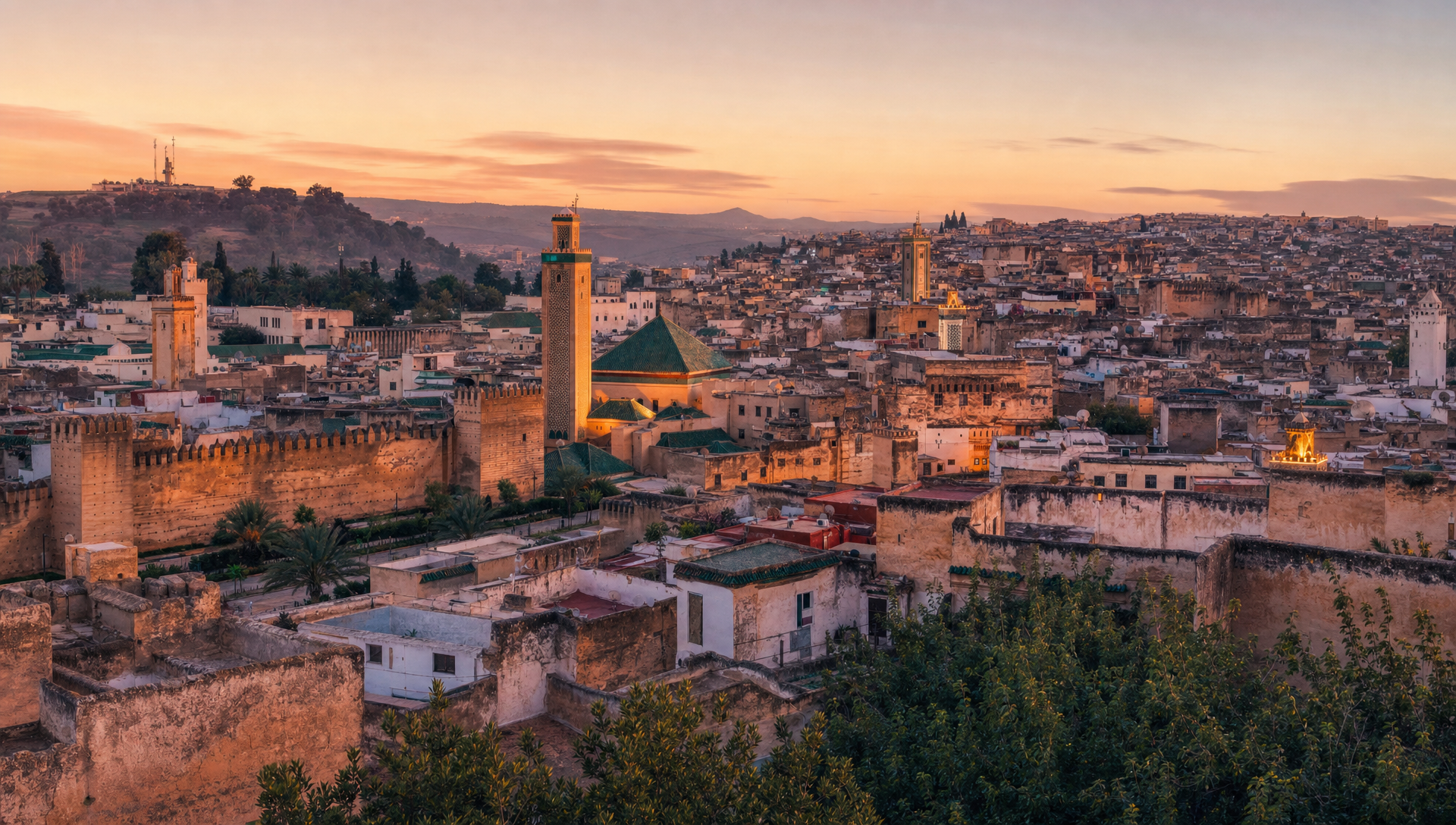
Fes isn't a museum piece — its medina still works the way it has for centuries. Tanneries, artisan souks, madrasas, and how to actually get there.
Most historic cities preserve their past behind glass. Fes just keeps living it. The world’s largest car-free urban area is also one of the last places where centuries-old crafts, trade routes and daily rhythms haven’t been turned into a reenactment — they’re just how the city still works.
A medina that never stands still
Fes el-Bali’s medina holds over 9,000 narrow alleyways, none of them open to cars — goods still move by donkey and handcart, exactly as they have for centuries. Artisans hammer copper in open workshops, merchants call out from stalls that have operated in the same family for generations.
The heart of Moroccan craftsmanship
Handwoven carpets, intricate zellige mosaics, brass lanterns, leather goods, ceramics and carved cedar wood — all made here using techniques passed down through generations rather than manufactured for the tourist trade. Our craft traditions guide covers the Marrakech equivalent of these same crafts, if you want to compare the two cities’ artisan traditions.
The famous tanneries
The Chouara Tannery is one of the oldest in the world, and still operates using the same stone vats and natural dyes it always has. Elevated viewing terraces at the surrounding leather shops let you look down over the vats — ask for a sprig of mint at the entrance, a local trick for the smell that’s become part of the ritual itself.
Hidden architectural masterpieces
Elegant madrasas, peaceful riads, carved cedar ceilings and ornate courtyards sit behind plain medina walls — the same instinct toward privacy-first architecture found throughout Morocco. The Al-Qarawiyyin, founded in 859 AD, is considered one of the oldest continuously operating universities in the world, and its library and courtyards remain functioning centers of learning today, not relics.
The taste of authentic Fes
Rich tagines, fragrant couscous, freshly baked bread and sweet pastries, often from family-run riads serving recipes perfected over generations rather than adapted for tourists.
A city that rewards slow exploration
Getting genuinely lost here is part of the experience — 9,000+ alleyways mean a map only gets you so far. Budget real time rather than trying to tick off landmarks; this is a city that punishes rushing more than most.
How to get to Fes
Fes sits in Morocco’s north-center, a genuine distance from Marrakech — not a day trip. Most visitors combine it with a Sahara route rather than treating it as a separate destination; our Fes to Marrakech 3-day desert experience connects the two cities via the Sahara, so you see Fes’s medina and a proper desert overnight in one route rather than two separate trips.
Why Fes is unlike anywhere else
Many destinations preserve history. Fes lives it — generations still practice the same crafts, in the same workshops, alongside modern daily life rather than performing it for visitors. For where it fits in a longer Morocco itinerary, see our best places to visit in Morocco guide.